Female Reproductive System
Oracle Medicine Atlas
INTRODUCTION TO THE FEMALE REPRODUCTIVE SYSTEM
The female reproductive system is the body’s primordial sanctuary of becoming. It is the chamber where matter remembers how to grow, where time slows enough for life to gather its shape, and where the deep intelligence of the body speaks in tides instead of lines. This system holds the map of renewal. It is the only system designed to cyclically build, shed, open, receive, and transform. Within the uterus, ovaries, cervix, and pelvic bowl lives an ancient biological rhythm that predates culture, language, and story. It is a rhythm that knows how to start again.
Every lineage touches this place. The Motherline is not merely genetic; it is a living river of memory carried through follicles, blood, and bone. Here, the imprints of nourishment and neglect, safety and fear, desire and suppression, belonging and exile all leave their signatures. The womb remembers what the women before you endured, what they could not speak, what they protected, and what they longed for. It also remembers what they overcame. This system is the keeper of those quiet triumphs.
To study this system is to study the architecture of creation itself. Not the symbolic feminine that culture has elevated or distorted, but the physical intelligence that knows how to hold paradox; softness with strength, receptivity with discernment, intimacy with boundaries, death with renewal. Within this terrain, life is not forced forward; it unfolds in cycles, spirals, and seasons. When a woman lives in alignment with these rhythms, she comes into a sovereignty that is felt in every layer of her body and field. Her clarity becomes steadier. Her intuition sharpens. Her creative current becomes unmistakable.
This system is not an invitation to romanticize the feminine. It is an invitation to understand it; biologically, emotionally, ancestrally, and energetically as one of the most complex and potent structures in the human body. To enter this study is to step into a field of truth: the feminine is not fragile. The feminine is infrastructure. Creation lives here.
A note from The Oracle
I want to name something clearly before we go further.
The female reproductive system is not a chapter. It is an entire world. I could teach for a year on this system alone; on fertility, endocrine patterning, ovarian signaling, trauma imprints, cyclical intelligence, ancestral encoding, and the ways the womb speaks through symptoms long before the mind understands their meaning. The Body Temple Atlas is designed to give you a deep and integrated understanding of every major system in the body, yet I also recognize that what we explore here cannot possibly encompass the full landscape of the feminine field.
This system is vast. It is layered. It is ancient. And it deserves a level of study that matches its complexity and its power. What you receive in this module is the foundation, the architecture, the map. But it is not the entire territory.
For that reason, I will be opening a dedicated course on the female reproductive system and fertility in 2026; a full descent into the physiology, the energetics, the cycles, the patterns of dysfunction I see in practice, and the pathways of healing that emerge when a woman is met at the level of her biology and her spirit. That offering will allow us to go deeper than this Atlas can hold.
For now, let what is written here be an initiation, a doorway, into a system worthy of lifelong study.

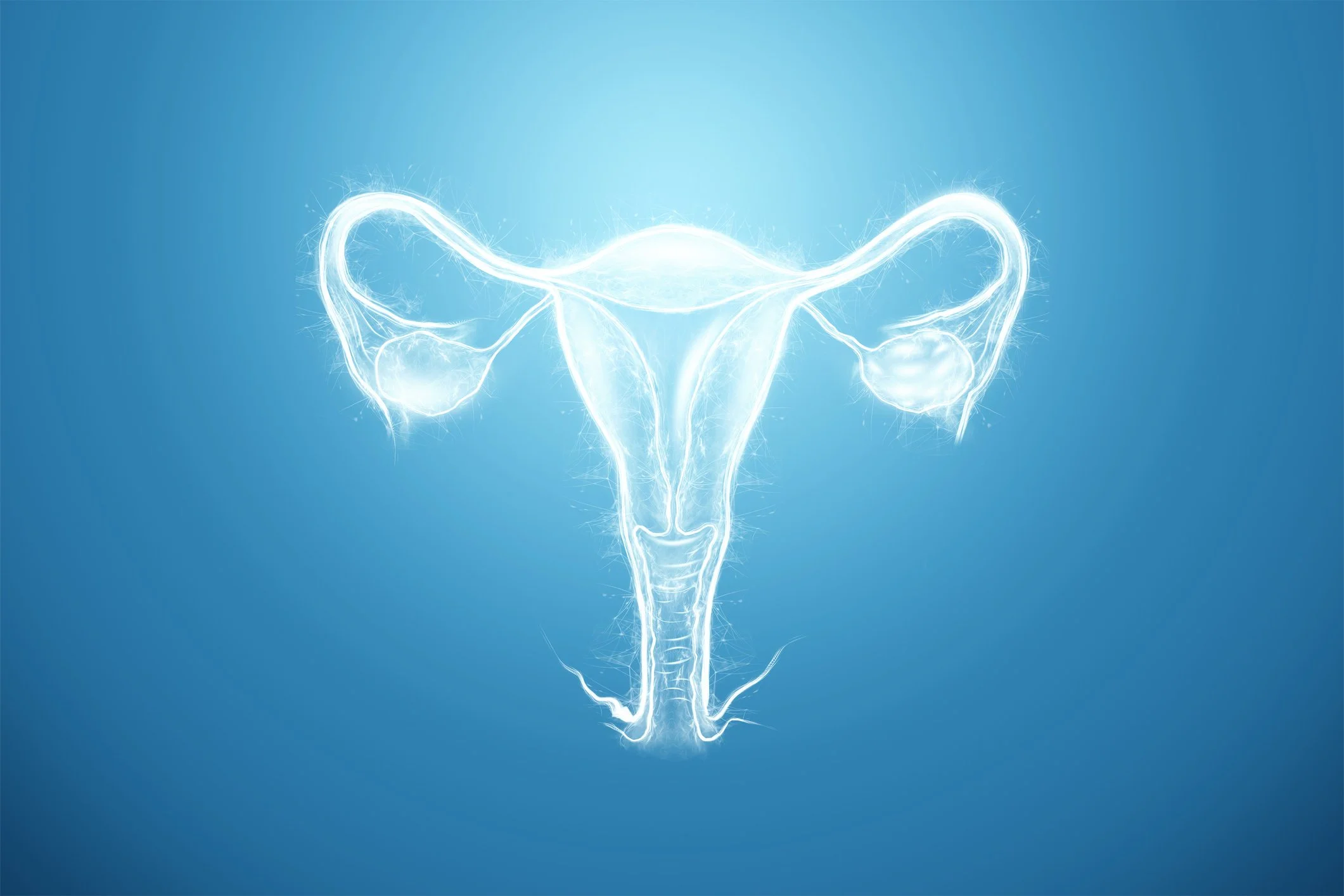
THE Anatomy
of The Female Reproductive System
Element: Water (primary) and Earth (secondary)
Chakra: Sacral (primary), Root and Heart (secondary)
Primary Meridians: Kidney, Spleen, Conception Vessel
Emotional Archetype: The Creatrix
1. The Ovaries
The primary reproductive organs. Responsible for oocyte (egg) maturation and release, as well as hormone production including estrogen, progesterone, inhibin, and small amounts of testosterone.
2. The Fallopian Tubes (Uterine Tubes)
Two narrow passageways that capture the ovulated egg, provide the environment for fertilization, and transport the early embryo toward the uterus.
3. The Uterus
A muscular, hollow organ designed to receive, nourish, and protect a developing embryo or to cyclically shed the endometrium each month. Composed of three layers: endometrium, myometrium, perimetrium. Also often the seat of female intuition and spiritual gifts.
4. The Endometrium
The inner lining of the uterus. Thickens in response to hormones each cycle and is shed during menstruation if implantation does not occur.
5. The Cervix
The lower, narrow neck of the uterus. Produces cervical mucus that changes across the cycle, creates the cervical os, and opens during labor.
6. The Vagina
A muscular, flexible canal connecting the cervix to the external body. Serves as a passage for menstruation, sexual intimacy, and childbirth. Maintains an acidic microbiome essential for defense.
7. The Vulva
The external reproductive anatomy including the labia majora, labia minora, clitoris, vestibule, urethral opening, and vaginal introitus.
8. The Clitoris
A highly innervated organ responsible for pleasure and sexual arousal. Extends internally with crura and bulbs, forming a larger structure than the external glans alone.
9. The Bartholin’s Glands
Two mucus-producing glands at the vaginal opening that support lubrication, especially during arousal.
10. The Skene’s Glands (Paraurethral Glands)
Glands near the urethra believed to contribute to lubrication and female ejaculate; functionally analogous to the prostate.
11. The Pelvic Floor
A sling of muscles including the levator ani group and coccygeus that support reproductive organs, maintain continence, stabilize the pelvis, and participate in orgasm and birth mechanics.
12. The Broad, Round, and Uterosacral Ligaments
Supportive structures that anchor the uterus and ovaries within the pelvis, maintain organ position, and influence blood flow and pelvic stability.
13. The Ovarian Ligament and Suspensory Ligament
Ligaments that stabilize the ovaries and carry essential blood vessels and nerves.
14. The Conception Vessel (Ren Mai)
An energetic channel that governs reproduction, fertility, cyclical rhythms, hormonal balance, and the womb space itself.
15. The Endocrine Axis
Though not physically “in” the pelvis, these structures are integral to female reproductive function:
• Hypothalamus
• Pituitary gland
• Luteinizing hormone (LH)
• Follicle-stimulating hormone (FSH)
• Estrogen production
• Progesterone production
• Anti-Müllerian hormone (AMH)
• Prolactin
• Thyroid hormones (T3, T4, TSH)
• Adrenal hormones (cortisol, DHEA, pregnenolone)
This axis governs ovulation, menstruation, fertility, libido, mood, metabolic stability, and the cyclical intelligence unique to the female body. It modulates follicle development, endometrial growth, cervical mucus patterns, thermal shifts, and the orchestration of the entire menstrual cycle. When this axis is balanced, the body moves with reliable rhythm and reproductive vitality. When disrupted, the system speaks loudly through cycle irregularities, PMS, anovulation, low ovarian reserve, mood changes, and shifts in energy or libido.
WHEN THE FEMALE REPRODUCTIVE SYSTEM SPEAKS
The female reproductive system speaks through rhythm, receptivity, nourishment, and the cyclical movement of lifeforce. When this system is balanced, the body moves in seasons of expansion and release with clarity and ease. Hormones rise and fall in harmonious conversation, the womb feels warm and responsive, desire flows without confusion, and the pelvic bowl becomes a steady ground of intuition, creativity, and inner knowing. This system thrives when life is allowed to move in arcs rather than straight lines.
When imbalances appear; in cycles, fertility, lubrication, PMS, libido, pelvic pain, or emotional volatility, they often reflect deeper negotiations within the Water and Earth of the body: how a person relates to safety, nourishment, receiving, boundaries, self-trust, and the internal permission to take up space in softness instead of tension. The feminine system reveals not only what is functioning, but how a woman is relating to the pace, pressure, and expectations of her life.
This system communicates through subtle shifts in cervical fluid, temperature, cycle length, sensitivity, appetite, sleep, and emotional tides. It reveals whether the kidneys feel resourced, whether the spleen feels supported, whether the heart feels held enough to open, and whether the lineage patterns surrounding womanhood are nourishing or constricting. When this system strains, it often signals suppressed emotion, chronic depletion, adrenal overextension, thyroid miscommunication, unresolved motherline wounds, or the body’s exhaustion from carrying more than it was meant to hold.
To listen to this system is to hear the body’s oldest language; the language of cycles, of becoming and unbecoming, of birth and renewal. It is the voice that speaks not in force but in timing, not in urgency but in truth. When the female reproductive system speaks, it calls a woman back to her own rhythm, to the wisdom of her blood, and to the deep remembering that creation begins in the quiet, nourished center of her being.

The Divine Feminine
The Motherline, The Wounding and the return of true Feminine Force
The female reproductive system is the oldest oracle in the body. Long before the mind formed language, the womb formed memory. Long before philosophy imagined spirit, the pelvis carried the blueprint of creation. This system is the seat of the Divine Feminine; not the culturally sanitized feminine, not the domesticated feminine, but the original force: cyclical, intuitive, instinctive, boundary-rich, and life-making. The feminine is not linear, not directional, not performance-based. She is tidal. She is mythic. She is knowing.
Every womb, every ovary, every inch of pelvic fascia is a living archive of what the feminine has endured. It carries the grief of silencing, the tension of survival, the exhaustion of caretaking, the ache of unmet needs, the rage of centuries without sovereignty, and the memory of a world that demanded women be everything while receiving almost nothing in return. Yet, beneath all of this, the Divine Feminine has never disappeared. She has only waited, patient as the Earth herself, watchful as moonlight, for the age when women would remember themselves again. That age is now.
The Motherline: The Memory Kept in the Body
The motherline is not simply ancestry. It is the emotional DNA passed through blood, through eggs, through wombs that held their breath for generations. The motherline shapes more than personality; it shapes physiology. If your foremothers survived through silence, your voice was shaped in their absence. If they survived through caretaking, your nervous system learned to prioritize everyone else. If they survived through shrinking, your pelvis learned to hold its power inward. If they endured cycles of harm without justice, your womb may hold tension without explanation.
These imprints are not ideas. They are felt truths in the tissues. They alter hormonal rhythms, ovarian signaling, uterine sensitivity, cervical opening, libido, pleasure, intuition, and boundary formation. They write themselves into the body like hieroglyphs, visible only to the part of you that has lived more than one lifetime. Each generation adds a verse. Each woman carries the entire story.
The feminine pain body is not made of trauma alone. It is made of the unexpressed brilliance, the unspoken intuition, the withheld rage, the abandoned desire, and the stifled power of the women who came before. When a woman heals, she is not healing herself; she is editing a lineage.
The Three Wounds of the Feminine Pain Body
Just as the masculine fracture comes from pressure, the feminine breaks from erosion; the slow wearing away of her truth, her needs, her intuition, her worth. The feminine carries three primary wounds, each one a doorway into both the pain and the awakening of the feminine force.
1. The Wound of Swallowed Truth
For thousands of years, the truth of women has been swallowed whole; their intuition dismissed, their emotions pathologized, their boundaries breached, their wisdom downgraded to superstition or hysteria. This wound lives at the throat and the womb simultaneously, because the womb is the first place the truth goes when the voice is not allowed to speak. This wound manifests as chronic pelvic tension, painful cycles, irregular menstruation, fibroids, endometriosis, low libido, anxiety, panic, and the ache women describe as “something is wrong, but I don’t know what.” The womb holds what the mouth cannot say. The body tightens around what the psyche has been trained to silence. When the feminine cannot express, she compresses. When she compresses, she forgets who she is. The healing of this wound begins when a woman tells the truth: not to the world, but to herself.
2. The Wound of Boundaryless Giving
Women have been conditioned to be the emotional infrastructure of their families, communities, and cultures. They have been asked to mother everyone. They have been asked to hold the weight of the world while receiving almost none of its nourishment. This creates the second wound: the wound of giving without replenishment. This wound lives in the spleen, the adrenals, the lymph, the pelvic floor, and the sacral bowl. It creates depletion so deep it masquerades as personality…“I am tired but this is just who I am.” It shows up as burnout, chronic fatigue, autoimmune patterns, cysts, amenorrhea, infertility, and the collapse of cycle vitality. The feminine in this state is not weak. She is overextended. She has poured herself into a world that taught her she must earn her right to rest. The healing of this wound begins the moment a woman realizes that saying no is a sacred act of survival, and a spell of reclamation.
3. The Wound of Inherited Shame
The oldest wound in the feminine body is shame; shame of desire, shame of pleasure, shame of bleeding, shame of softness, shame of power, shame of anger, shame of needing, shame of being too much or not enough. This wound did not begin with the individual woman; it began with the collective fear of feminine power itself. This wound lives in the cervix, the clitoris, the vulva, the hips, the breasts, and the entire pelvic field. It manifests as numbness, shutdown, dissociation, sexual pain, difficulty accessing pleasure, self-abandonment, and the feeling that one must shrink to be loved. Shame teaches a woman to distrust her own nature. And a woman who distrusts her nature cannot access her intuition, her desire, or her sovereignty. The healing of this wound begins when a woman remembers that pleasure is not frivolous: it is information. It is guidance. It is power.
The Return of the Feminine in the Aquarian Age
We are entering an era where the feminine will no longer survive by suppressing herself. The Aquarian Age demands authenticity, illumination, embodiment, truth-telling, boundary, intuition, and energetic sovereignty; all qualities born in the feminine body. The feminine is rising not in rebellion, but in remembrance. She is resurfacing through women’s symptoms, women’s intuition increasing, women’s exhaustion spilling over the edges, women’s rage becoming uncontainable, women’s pleasure awakening after years of numbing, women’s boundaries becoming sharper than any sword.
The Divine Feminine is not returning quietly.
She is returning like a tide that has been waiting for centuries to reach the shore.
She is returning through the wombs of women who refuse to forget themselves.
She is returning through the reclamation of pace, of rest, of intuition, of desire.
She is returning through women remembering that they are not here to be palatable; they are here to be powerful.
When the feminine rises, the world rearranges around her.

I built you from my own body so you would never be alone. When you forget yourself, place your hand on the Earth and I will remind you.
-Mother Earth

Make it stand out.
It all begins with an idea. Maybe you want to launch a business. Maybe you want to turn a hobby into something more. Or maybe you have a creative project to share with the world. Whatever it is, the way you tell your story online can make all the difference.

Make it stand out.
It all begins with an idea. Maybe you want to launch a business. Maybe you want to turn a hobby into something more. Or maybe you have a creative project to share with the world. Whatever it is, the way you tell your story online can make all the difference.

“It all begins with an idea. Maybe you want to launch a business. Maybe you want to turn a hobby into something more. Or maybe you have a creative project to share with the world. Whatever it is, the way you tell your story online can make all the difference.”
— Squarespace