The CardioThoracic
Oracle Medicine Atlas
Understanding ailments of the Heart, Lungs, Ribcage, Diaphragm & large vessels
THE CARDIOTHORACIC REALM: THE ALTAR OF BREATH AND BLOOD
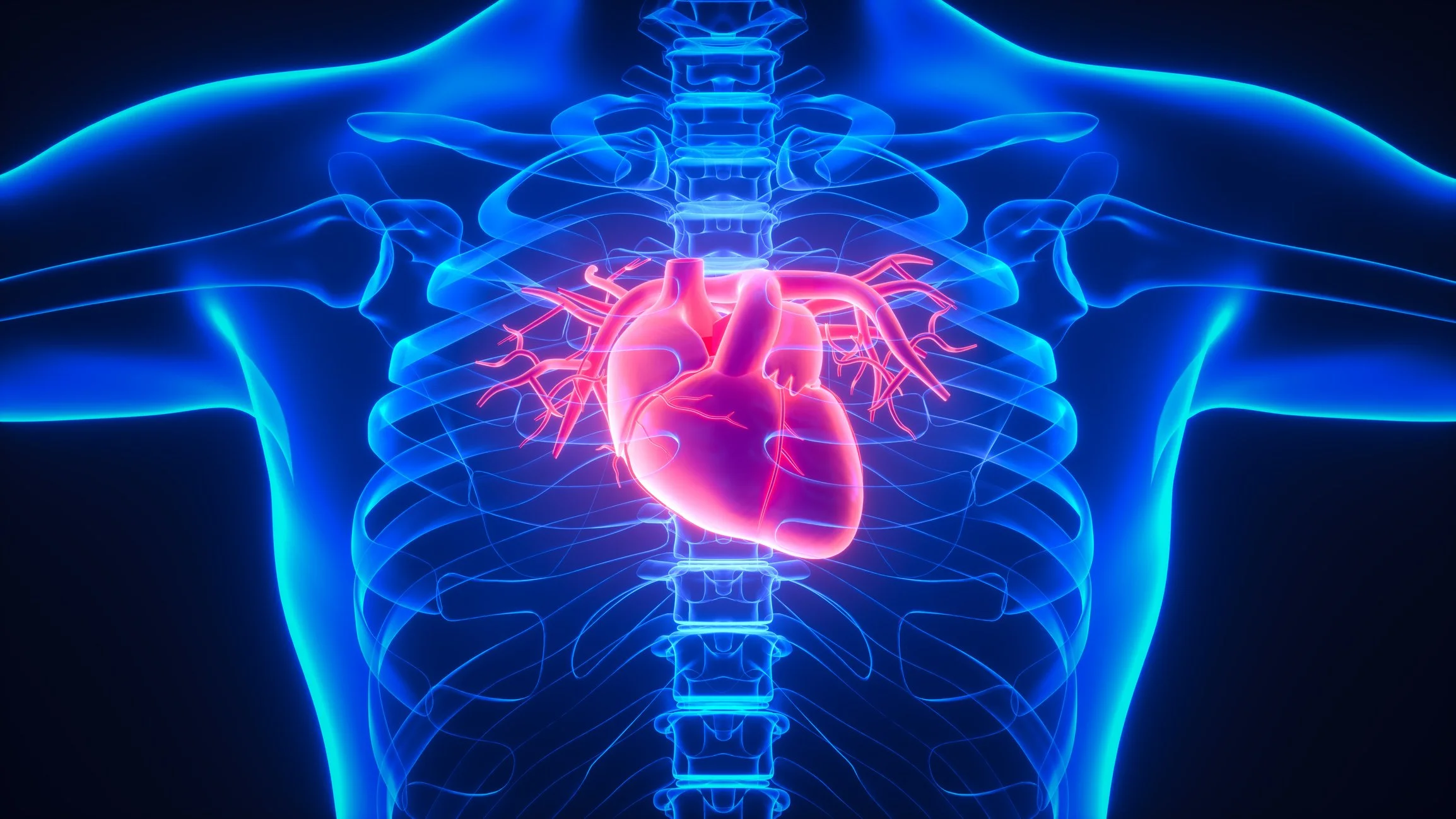
The cardiothoracic body is the sacred meeting place between ‘heaven and earth’. It is where breath becomes form, where circulation becomes consciousness, and where the intelligence of life reveals itself through pulse and rhythm. The heart, lungs, ribs, diaphragm, and vascular network form the living cathedral of exchange where oxygen, carbon dioxide, nutrients, hormones, and emotion all move in an unceasing dialogue that keeps us alive. Here, in the chambers, vessels, and respiratory fields, the body learns what it means to give and receive without collapse or control.
This region is the architecture of relationship. The lungs teach expansion and surrender, the capacity to welcome the world inward and let go of what no longer serves. The diaphragm is the gateway, translating subtle emotional pressure into breath patterns that become postures, choices, and behaviors. The heart is the conductor of coherence, holding both biological precision and spiritual resonance. It contracts and releases in unwavering devotion, storing the imprints of connection and rupture, joy and heartbreak, truth and silence. And the vessels, branching like rivers through the body, reveal how freely or how guardedly we let life move through us.
The cardiothoracic body holds our lineage of courage, vulnerability, grief, and hope. It remembers every breath we swallowed, every emotion we held for too long, every moment we opened when we feared it might break us. When this terrain is spacious and regulated, we experience clarity, compassion, and steadiness. Our rhythms synchronize. Our breath deepens. Our system trusts the flow of giving and receiving. When it is constricted, shallow, or dysregulated, we feel the ache of old grief, the weight of suppressed expression, the vigilance of a heart that had to protect itself too early.
To work with the cardiothoracic region is to restore resonance. It is to honor the intelligence of breath as medicine, the intelligence of blood as messenger, and the heart as both anatomical engine and spiritual compass. It is to remember that this is not merely an organ system, but a living altar within the body where meaning is made and remade with every inhale and exhale. Here, life is not something to force or overcome. It is something to attune to. A rhythm that rises and falls inside you, whispering, You are meant to be here. You are meant to feel. You are meant to live connected.

Anatomy & Function
The cardiothoracic region is the body’s living sanctuary of rhythm. It is where breath becomes circulation, where pressure gradients sculpt movement, and where the heart and lungs work in exquisite partnership to sustain life. This is the internal horizon between the seen and unseen, translating the chemistry of oxygen and carbon dioxide into energy, clarity, feeling, and presence. The rib cage, diaphragm, pleura, heart, and vascular network form a dynamic system of expansion and release, each structure essential for coherence across the entire body.
The lungs are vast internal landscapes of delicate alveolar branches, each one a microcosmic world of exchange. With every inhale, over 300 million alveoli open like tiny blossoms, creating nearly a tennis court of surface area where oxygen dissolves into the bloodstream. Each breath mirrors emotional patterning and nervous system tone, revealing how freely or how guardedly we allow life in. The lungs are also a filtration system for airborne particles, pathogens, and energetic imprints, shaping immune signaling and influencing vagal tone.
The diaphragm is the body’s central axis of breath and posture. As a muscular dome attaching to the lower ribs, lumbar spine, and sternum, it governs intra-abdominal pressure, venous return, lymphatic flow, and the mechanics of the entire thoracic cavity. With every contraction, it descends, creating negative pressure that draws air into the lungs while massaging the organs beneath it. When the diaphragm is restricted, breath becomes shallow and the nervous system shifts toward vigilance. When it is supple and responsive, it becomes a conduit of regulation, softening the entire system.
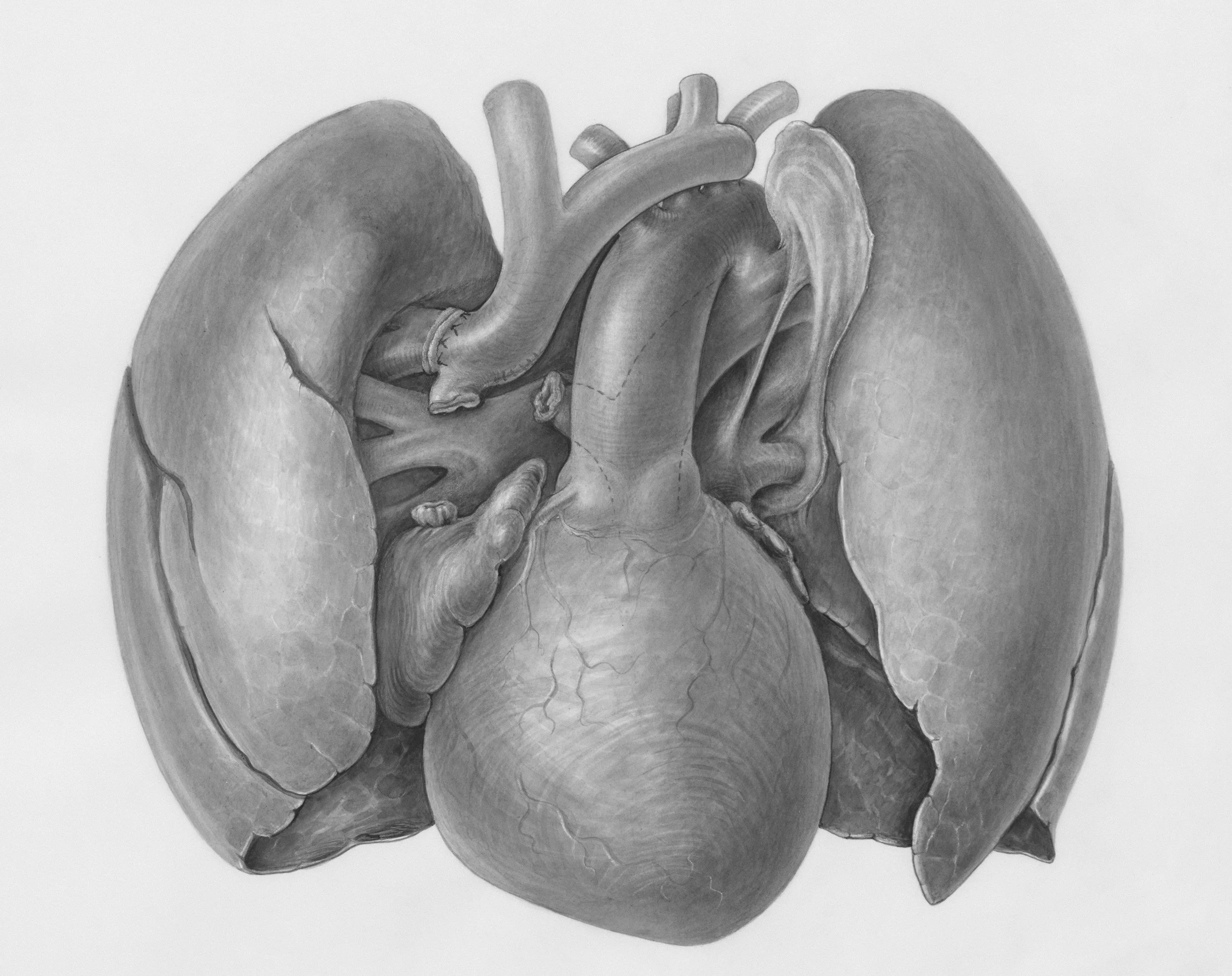
The heart is a four-chambered conductor orchestrating the flow of blood with impeccable timing. It moves roughly five liters of blood per minute at rest, adjusting instantaneously to internal and external demands through autonomic signals, hormonal cues, baroreceptors, and its own intrinsic electrical network. The myocardium itself is a unique tissue capable of generating and conducting electrical impulses, creating the steady rhythm that underlies consciousness. Through coronary circulation, the heart feeds itself first, ensuring its own vitality so it can sustain the entire organism. Its structural integrity, from valves to papillary muscles to pericardial sac, speaks to the body’s devotion to both protection and movement.
The rib cage is a dynamic protective frame, composed of sternum, thoracic vertebrae, and twelve pairs of ribs that move in coordinated patterns known as pump-handle and bucket-handle motions. These movements expand the thoracic cavity in three dimensions, enabling efficient breathing while shielding the heart and lungs from mechanical injury. Intercostal muscles weave between each rib, stabilizing the chest wall, facilitating rotation, and supporting respiratory mechanics. The rib cage is not rigid armor; it is a flexible resonance chamber, transmitting sound, vibration, and breath throughout the body.
The vascular system within the thorax distributes life. The aorta emerges from the heart with the force of a river in spring, branching into arteries that deliver oxygenated blood to every tissue. Veins return deoxygenated blood with the assistance of one-way valves and muscular contraction, emptying into the superior and inferior vena cava. Capillaries form intimate contact points between blood and tissue, regulating nutrient exchange, waste removal, and temperature. This circulatory web reflects emotional patterning as well. Where vessels constrict, we see echoes of protection and contraction. Where they dilate, we witness the physiology of openness and trust.
Together, the structures of the cardiothoracic region mirror the deeper architecture of human experience. Breath reflects safety. Pulse reflects presence. Pressure reflects internal truth. The heart and lungs do not merely keep us alive. They teach us how to live. When this system functions with harmony, the entire body resynchronizes. When it is strained, the body compensates through tension, shallow breath, altered posture, and emotional guarding. This is the architecture of regulation made tangible, the body’s way of saying, You are allowed to expand. You are allowed to feel. You are allowed to move with life rather than bracing against it.
When The Heart Space Speaks
The Cardiothoracic region is the body’s inner compass of truth and coherence. When breath or circulation becomes strained, if often reflects a deeper conflict between expression and protection, openness and vigilance. Each imbalance can be read both physiologically and energetically, offering a doorway into the dialogue between breath, emotion and the rhythms that shape how we connect with life itself.

The LUNGS:
THE LANGUAGE OF EXCHANGE AND LETTING GO
Element: Metal
Chakra: Heart (primary), Throat (secondary)
Primary Meridians: Lung and Large Intestine
Emotional Archetype: The Alchemist of Letting Go, The One Who Learns to Breathe Again
Anatomy and Function
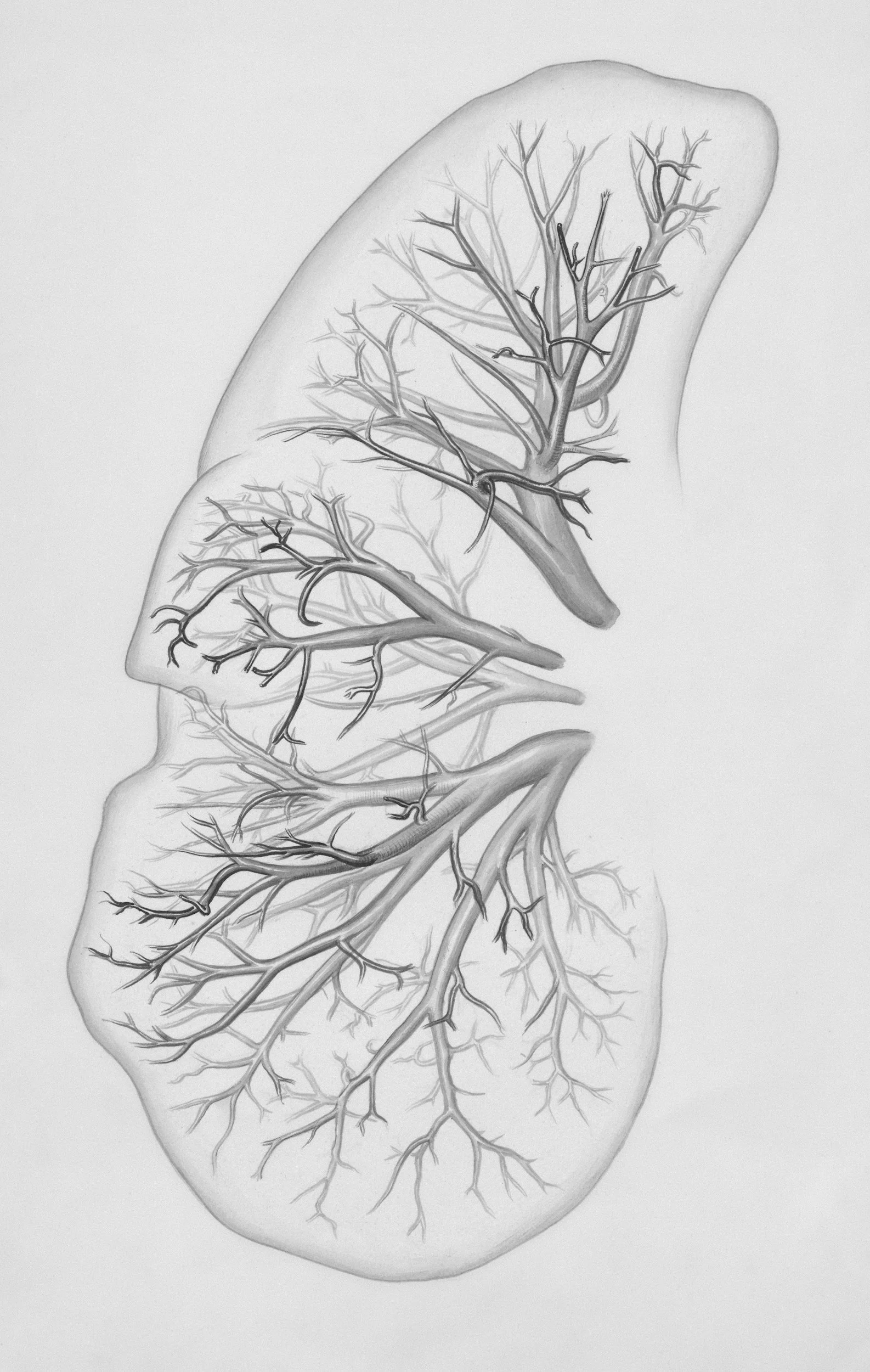
Each lung is a breathtaking biological landscape, containing over 300 million alveoli that unfold like microscopic blossoms with every inhale. These delicate structures create an immense surface area where oxygen diffuses into the bloodstream and carbon dioxide is released back to the world. The lungs regulate pH, shape immune defense, and synchronize with the diaphragm to form the pressure gradients that sustain life. They filter airborne particles, communicate with the autonomic nervous system, and respond instantly to emotional states, expanding with safety and contracting with grief or vigilance. Their branching bronchi, pleura, and vascular networks form a living map of how the body exchanges energy with its environment. Every breath is a negotiation between holding and releasing, receiving and letting go, revealing how freely we allow life in and how gracefully we surrender what no longer serves.
Common Ailments of the Lungs and how to bring healing to them
-
A chronic cough, chest tightness, or shallow breathing often signals inflammation in the bronchial passages, stagnation of phlegm, or irritation from environmental triggers. Energetically, it reflects difficulty releasing emotion or a long-held vigilance pattern in the nervous system. The body constricts around unspoken grief or unprocessed experiences, creating tightness where expansion should live.
Healing Tools:
Physical: Steam inhalation with warm saline, gentle percussion on the upper back to mobilize mucus, and paced breathing exercises to restore diaphragmatic movement.
Herbal: Lung-tonifying herbs such as mullein, elecampane, marshmallow root, and thyme. Use as teas, tinctures, or steams.
Energetic: Open the Lung meridian by massaging LU 1 and LU 2 near the chest and LU 9 at the wrist to encourage flow of Qi and ease constriction.
Ritual: Sit upright, place both hands on the ribcage, and exhale while imagining gray smoke leaving the lungs. Inhale visualizing clean light entering the chest.
-
Shallow breathing often develops when the diaphragm is restricted or when the sympathetic nervous system dominates. Functionally, alveolar ventilation decreases, and the body struggles to oxygenate tissues efficiently. Energetically, it mirrors fear, overwhelm, or a learned pattern of taking in as little as possible to remain safe.
Healing Tools:
Physical: Diaphragm stretches, pursed-lip breathing, and slow nasal inhalations to retrain respiratory volume.
Herbal: Adaptogenic and nervine allies such as tulsi, reishi, and linden to regulate stress responses that compress breath.
Energetic: Practice gentle breath expansion exercises, imagining the lungs widening in all directions. Activate the Heart and Lung chakras through rhythmic tapping.
Ritual: Lie with one hand on your chest and one on your belly. Speak aloud: “I allow life in. I breathe with trust.” Repeat for five minutes.
-
From a physiological standpoint, mucus forms to protect the lungs from irritants, allergens, infection, or inflammatory triggers. (Including molds and Mycotoxins) Excess or sticky phlegm points to impaired mucociliary clearance, dehydration, or immune activation. Energetically, mucus often symbolizes emotional congestion; this is old grief, resentment, or stories stuck in the body.
Healing Tools:
Physical: Warm saline nebulizing (non-medicated), hot showers, humidifiers, and postural drainage techniques.
Herbal: Expectorants and lung-clearing herbs such as elecampane, osha, ginger, horehound, and turmeric.
Energetic: Clear stagnant Qi by stimulating the Lung and Large Intestine meridians.
Ritual: Write down something you are carrying that feels heavy. Burn the paper safely and visualize the smoke releasing from your internal landscape.
-
Asthma reflects airway inflammation, smooth muscle constriction, and hypersensitive immune responses. From an energetic lens, this pattern often appears when boundaries feel unclear or violated. The lungs constrict instinctively, trying to limit what enters.
Healing Tools:
Physical: Medical inhalers and emergency plans as needed, paired with long-term breathing retraining, nasal-only breathing, and cold-temperature minimization.
Herbal: Anti-inflammatory herbs like lobelia (low dose), mullein, turmeric, and magnesium-rich blends to support smooth muscle relaxation.
Energetic: Strengthen the Lung–Large Intestine axis by tapping or acupressure at LU 1, LI 4, and CV 17.
Ritual: Stand outside at sunrise. With every inhale say, “I receive,” and with every exhale say, “I choose what stays.”
-
A persistent cough after a respiratory infection indicates that the mucosal lining is still healing or that immune debris remains in the bronchi. Energetically, this often appears when the body has purged something but has not fully integrated the lesson or emotional charge behind the illness.
Healing Tools:
Physical: Gentle aerobic movement to stimulate lymphatics, honey with warm herbal tea, humidification, and rest.
Herbal: Mullein, marshmallow root, licorice, and orange peel for soothing and lung repair.
Energetic: Breath-wave exercises that move from belly to chest, visualizing the lungs smoothing and clearing.
Ritual: Light a candle and speak aloud what the illness moved through you. The lungs heal faster when the story is acknowledged.
-
As taught in both Chinese Medicine and Energetic Medicine, the lungs are the primary home of grief. When grief is suppressed or unresolved, the chest may feel heavy, tight, or collapsed. Breathing becomes shallow, and the ribcage loses its natural buoyancy. Physiologically, this pattern can mirror reduced lung expansion, stiffness in the intercostals, and altered autonomic tone.
Healing Tools:
Physical: Gentle heart-opening stretches, diaphragmatic breathing, and slow walking to mobilize the thoracic cavity.
Herbal: Grief-supporting herbs such as rose, hawthorn leaf and flower, linden, and mullein to soften the chest.
Energetic: Tap CV 17 (the Sea of Tranquility) and LU 1 simultaneously to move emotional stagnation from the chest.
Ritual: Place both hands over the sternum. Speak the name of what has been lost. Inhale light into the space. Exhale the heaviness.
-
This ailment is almost always emotional or energetic. It arises when the system perceives a subtle threat, or when the psyche is bracing for impact. The lungs physically can expand, but the nervous system restricts their movement. This often reflects unresolved fear, anticipatory grief, or unspoken truth sitting beneath the sternum.
Healing Tools:
Physical: Slow 4–6 breathing, rib mobilization, and belly-to-chest breath waves.
Herbal: Nervines like lemon balm, skullcap, tulsi, and passionflower to quiet the sympathetic reflex.
Energetic: Sweep your hands from collarbone to lower ribs while imagining clearing smoke from the lungs.
Ritual: Sit upright and whisper, “It is safe to breathe.” Repeat until breath naturally deepens.
-
Energetically, collapsed posture indicates self-protection, boundary contraction, or a pattern of “making oneself small.” This posture decreases lung capacity, compresses the diaphragm, and flattens the heart chakra. Many people with this pattern are unaware that their body has adopted a position of long-term bracing. I see this often with clients with childhood trauma/ loss (root chakra collapse)
Healing Tools:
Physical: Thoracic extension exercises, pec stretching, breath-led spinal unwinding.
Herbal: Uplifting aromatic allies like lavender, rosemary, eucalyptus, or orange peel in diffusers or chest balms.
Energetic: Open the Heart and Lung chakras with gentle tapping or circular motions over the sternum.
Ritual: Stand tall with hands on ribs. Inhale while imagining your chest blooming open like petals. Exhale and root into the earth.
-
Energetically, this pattern reflects hypervigilance, over responsibility, or a life lived waiting for the next impact. Breath becomes a series of micro-holds. The lungs rarely fill completely. Even in silence, the system feels as if it must stay alert.
Healing Tools:
Physical: Box breathing with extended exhales, somatic shaking, and diaphragmatic release work. 4×4×6 (Inhale 4 Hold 4 Exhale 6)
Herbal: Calming herbs such as chamomile, linden, and reishi to soften chronic sympathetic activation.
Energetic: Trace the Lung meridian from chest to thumb with intention to restore flow and trust.
Ritual: With eyes closed, exhale forcefully three times, releasing the past. Then whisper, “I return to my breath.”
-
When the lungs contract emotionally, many people report feeling disconnected from their own inner world. Breath becomes functional but not embodied. This often follows burnout, long-term caretaking roles, or emotional overload. I see this often in healers, nurses, doctors, Bardo workers
Healing Tools:
Physical: Slow movement practices, restorative yoga, and breath-led body scanning.
Herbal: Heart-softening herbs like hawthorn, rose, and motherwort to reconnect breath and feeling.
Energetic: Place one hand on the chest and one on the low belly. Breathe into the connection between them.
Ritual: Journal one sentence each night beginning with “Today, I felt…” to slowly reopen the emotional lungs.
Advanced Subsection: The Lungs
-
Modern lungs face an unprecedented level of environmental stress. Mold, chemicals, fragrances, volatile organic compounds, pollution, wildfire smoke, microplastics, and indoor air toxins all exert pressure on the delicate respiratory terrain. These exposures often produce chronic patterns that can look like asthma, allergies, lingering cough, chest tightness, or the persistent feeling that breath cannot deepen even when the air is clear. These are not random symptoms; they are the lungs showing us how hard they are working to protect the internal environment.
Mold and mycotoxins create one of the clearest examples of this burden. Physiologically, they inflame the bronchi, thicken mucus, and generate congestion that lingers far beyond any cold. In the traditional energetic frameworks that have guided respiratory medicine for thousands of years, this pattern aligns with the idea of dampness; (a heaviness and stagnation that weighs on the chest and slows the movement of breath.) Ayurveda describes a similar concept through Kapha imbalance, where excess moisture, mucus, and emotional accumulation mirror what is happening physically. These frameworks help us understand why mold feels so suffocating to the body: it burdens both the physical lungs and the subtle pathways that govern clarity, movement, and emotional release.
Chemical and fragrance sensitivity, now incredibly common, reveals a different pattern. Synthetic scents, cleaners, and off-gassing materials can create burning lungs, shallow breathing, headaches, and sudden reactivity. Energetically, this mirrors irritation and agitation of the lung’s natural rhythms; a disruption of breath that feels sharp, invasive, or overwhelming.
Traditional medicine systems would simply describe this as a disturbance of the lung’s capacity to stay clear, supple, and responsive. These concepts help describe what clients often feel intuitively: that certain environments “hit wrong” in their chest.
Pollution and wildfire smoke bring dryness, irritation, and a sense of internal rawness. This reflects a pattern where the lungs lose moisture, resiliency, and ease. Across cultures, this is understood as the breath becoming too hot, dry, or depleted, no longer able to cool, soothe, or filter what enters. These exposures are not just inflammatory; they symbolically imprint the sense of breathing in what is heavy, chaotic, or collectively burdened.
Vaping, cigarette smoke, and secondhand exposure create still another dynamic. These inputs dry lung tissue, irritate the bronchi, and weaken clearing mechanisms. Energetically, smoke has long been associated with suppressed expression or unprocessed emotion, especially grief. Clients often describe feeling like their chest is tight, muted, or unavailable. Traditional perspectives would simply say the lung’s deeper reserves, its capacity for clarity and inspiration become depleted.
Indoor toxins from renovations, furniture, carpets, and adhesives add to this burden. This is a pattern of environmental mismatch, where the space someone lives or works in creates subtle respiratory strain. The lungs reflect this immediately through tightness, scratchiness, insomnia, or mild congestion. These traditional frameworks teach us to read the lungs not only as filters of air, but interpreters of environment.
Microplastics and airborne chemicals represent the newest layer: ambient toxins the lungs must constantly negotiate. These exposures generate low-grade inflammation and slow recovery after illness, symbolizing accumulation without release, a form of energetic and biological clutter that mirrors the modern world.
Across all toxic exposures, the lungs speak the same language: the body is doing everything it can to maintain clarity, expansion, and order in the face of environmental overload.
-
Healing requires addressing the lungs as both physical and energetic structures, honoring their need for protection, movement, clearing, and renewal.
Physical Support:
Encourage regular ventilation of living spaces, HEPA filtration, humidification when air is dry, and removal of scented or chemical products when possible. Clients may benefit from gentle aerobic movement, diaphragmatic breathing, saline nebulization, and targeted nutrients such as NAC and antioxidants. These approaches strengthen the lung’s clearing mechanisms and reduce inflammatory load.
Herbal Support (within scope):
Herbs like mullein, elecampane, marshmallow root, thyme, rosemary, and linden moisten, soothe, and restore lung tissue. Adaptogens such as tulsi or reishi help regulate the stress responses that constrict breath. For confirmed mold exposures Golden Thread, Propolis, X-clear nasal sprays and binders like Takesumi are helpful. I also like Schisandra for toxin exposures. Always practice within your professional boundaries and refer appropriately when a formulation exceeds your training.
Traditional Medicine Insights
Old healing systems like TCM consistently recognized that the lungs struggle when there is too much heaviness, too much dryness, too much irritation, or too much accumulation. These are simply different expressions of the same idea: the lungs need rhythm, movement, clarity, and clean input. This understanding helps practitioners read lung patterns more intuitively, without needing to study entire medical systems.
Energetic and Breath-Based Support:
Clear the chest field with sweeping motions, tapping, or rib-opening breathwork. Visualize clean light entering with the inhale and environmental residue leaving with the exhale. Work with the symbolic boundaries of breath; what the client allows in and what they consciously release.
Ritual and Environment:
Invite fresh air into the home daily. Burn herbs or diffuse essential oils safely to reset the environment. Encourage clients to step outside at least once per day and take three intentional breaths, reconnecting to the truth that life is still available to them even when their inner world feels heavy.
-
As always, practitioners must remain within their training and level of care. Many toxic exposure patterns require formal testing: environmental testing for mold, air quality evaluation, mycotoxin panels, bloodwork or medical diagnostics.
Your role if you are a practitioner is to support the body’s innate resilience, help interpret patterns, and know when further evaluation is required. When in doubt refer it out, True healers hold the oath of Do no harm… remember that.

The DIAPHRAGM:
THE GATEWAY OF BREATH AND INNER MOVEMENT
Element: Air / Ether (Ayurvedic), Bridge of Metal and Earth influences
Chakra: Solar Plexus (primary), Root and Heart (secondary integration)
Primary Meridians: Liver, Kidney, and the internal pathway of the Lung
Emotional Archetype: The Threshold Keeper, The One Who Translates Pressure Into Power
Anatomy and Function
The diaphragm is the body’s central axis of breath, posture, and internal movement. This muscular dome attaches to the lower ribs, lumbar spine, and sternum, forming a powerful boundary between the thoracic and abdominal cavities. With every inhale, it contracts and descends, creating the negative pressure that draws air into the lungs; with every exhale, it rises, massaging the liver, stomach, and surrounding organs. This rhythmic movement influences venous return, lymphatic flow, digestion, spinal stability, and the global tone of the autonomic nervous system.
The diaphragm is more than a breathing muscle. It is a translator of emotion, pressure, and lived experience. When fear, grief, or bracing patterns take hold, the diaphragm stiffens or rises prematurely, trapping breath in the upper chest and diminishing the lungs’ full expansion. When it is supple, responsive, and engaged, breath becomes fluid, the heart rhythm steadies, and the entire body moves into coherence.
Across healing traditions, this structure is recognized as a threshold. Ayurveda views diaphragm dysfunction as a disruption in the flow of prana, creating irregular breathing, digestive stagnation, or emotional compression. Chinese medicine sees tension here as a blockage of free Qi movement between the upper and lower body, disturbing harmony between breath, digestion, and emotional expression. Energetically, the diaphragm is the gatekeeper of embodiment, regulating how deeply life is allowed to enter and how safely the body can release.
Every breath that passes through the diaphragm becomes a message to the nervous system. Its flexibility is synonymous with inner resiliency; its rigidity mirrors patterns of vigilance, overwhelm, or self-protection. A healthy diaphragm is not simply strong, it is responsive, intuitive, and attuned.
Common Ailments of the Diaphragm and how to bring healing to them
-
Diaphragmatic restriction often appears when chronic stress, fear, or bracing patterns tighten the muscle and prevent full descent on inhalation. Physiologically, this reduces lung expansion, impairs venous return, and alters the pressure dynamics between the thoracic and abdominal cavities. Energetically, a tight diaphragm mirrors emotional guarding, a body that holds itself in a state of vigilance, unable to fully soften into breath or safety.
Healing Tools:
Physical: Diaphragmatic release techniques, rib mobilization, slow belly-to-rib breathing, and gentle thoracic extension stretches.
Herbal: Nervine and grounding herbs such as linden, chamomile, tulsi, and ashwagandha to reduce sympathetic tension.
Energetic: Place hands on the lower ribs and visualize warm light softening the diaphragm on each inhale.
Ritual: Lie with a stone over the solar plexus, breathing as if the stone is rising and falling with the tide.
-
Reverse breathing occurs when the abdomen pulls inward on inhale and outward on exhale, signaling dysfunctional diaphragm mechanics. This pattern disrupts oxygenation, stabilizing core pressure, and autonomic regulation. Energetically, reverse breathing reflects inverted emotional patterns; holding in what needs expression or leaking energy where containment is required.
Healing Tools:
Physical: Slow nasal breathing, hand-over-belly breath retraining, and pacing breath to a 4–6 rhythm.
Herbal: Reishi, skullcap, and passionflower to calm the nervous system and restore natural breathing rhythms.
Energetic: Trace the Ren channel from the sternum to the pelvis to restore downward breath movement.
Ritual: Sit upright and repeat, “My breath moves in the direction of truth,” while practicing gentle belly expansion.
-
Chronic micro-holds in the breath (often subconscious) signal autonomic freeze patterns. Physiologically, this reduces diaphragm movement, increases CO₂ sensitivity, and heightens sympathetic firing. (Clients express this often as Anxiety) Emotionally, it reflects a lifetime of bracing for impact or waiting for the next thing to go wrong. I see this in emotional and physical trauma survivors, especially childhood traumas.
Healing Tools:
Physical: Box breathing with extended exhales, humming on the out breath to activate the vagus nerve, and rhythmic rocking.
Herbal: Nervine herbs like lemon balm and linden to soften the freeze response.
Energetic: Use gentle tapping along the lower ribs to invite movement and thawing into the diaphragm.
Ritual: Write down one thing you no longer wish to brace for. Tear the paper and exhale as if releasing it from your body.
-
Hiatal restriction occurs when the diaphragm tightens around the esophageal opening, pulling the stomach upward. This creates reflux, difficulty swallowing, chest pressure, or the sensation of breath catching high in the throat. Energetically, this pattern reflects swallowed emotion, unvoiced truth, or internalized pressure.
Healing Tools:
Physical: Gentle hiatal release techniques, avoiding late-night eating, and slow diaphragmatic descent exercises.
Herbal: Demulcents like marshmallow root and slippery elm to soothe esophageal irritation.
Energetic: Visualize the esophageal opening softening and widening with each exhale.
Ritual: Place hands on sternum and belly and speak aloud something you have not allowed yourself to say.
-
The diaphragm intersects the solar plexus, the energetic center of willpower, identity, and personal truth. When this region is tight, clients report anxiety, digestive disturbances, insecurity, or a feeling of “not being able to catch their breath even when nothing is wrong.” Physiologically, this reflects tension in the diaphragm’s crura and attachments to the lumbar spine.
Healing Tools:
Physical: Thoracic–lumbar mobility work, cat–cow breathing, and gentle self-massage at the lower ribs. Yoga is great here.
Herbal: Warming digestive herbs like ginger, fennel, or chamomile to ease abdominal tension.
Energetic: Breath into the solar plexus while imagining a flame strengthening and rising.
Ritual: Stand tall and inhale deeply while stating, “I reclaim the space that is mine.”
-
The diaphragm is where emotional pressure accumulates. People who habitually suppress grief, anger, or fear often experience chronic tightness beneath the ribs. Physiologically, this affects digestion, lymph flow, and respiration. Energetically, the diaphragm becomes a “lid” that traps emotion rather than letting it metabolize. I see this pattern often in suppressed men and women… and in men when the ‘lid’ blows, it usually comes out as rage.
Healing Tools:
Physical: Somatic shaking, prone breathing, and movement practices that encourage release.
Herbal: Rose, motherwort, and hawthorn to soften emotional constriction in the chest and midline.
Energetic: Sweep hands downward from ribs to pelvis, clearing stagnation from the emotional body.
Ritual: In a private space, place hands on ribs and speak or YELL one sentence of truth you have resisted. Let breath follow.
ADVANCED: ENERGETIC AND SHAMANIC AILMENTS OF THE DIAPHRAGM
The diaphragm is the threshold below the heart, the muscular gate that responds instantly to shifts in emotion, memory, intuition, and environment. While the heart chakra bridges the upper and lower worlds, the diaphragm reflects how well this bridge is functioning. When the heart is overwhelmed, constricted, or fragmented, the diaphragm often becomes the first structure to bear the load.
A Note on Energetic and Shamanic Practices
This advanced section includes language drawn from energetic and shamanic traditions. These frameworks are thousands of years old and appear in cultures across the world, but they do not require a specific belief system to be useful. In this course, “shamanic” does not refer to religion, ritual magic, or any form of spiritual authority. It simply describes a way of understanding the body that integrates emotion, memory, intuition, and the subtle patterns that shape how we breathe and inhabit ourselves.
If these concepts resonate with you, you are welcome to work with them. If they do not, or if they fall outside your scope of practice, you can safely set them aside. The physiological and somatic principles in this course stand on their own. The energetic and shamanic layers are included only for students and practitioners who work with the emotional or symbolic dimensions of healing, or who find that these perspectives help them understand the deeper stories that the body carries.
Your healing journey does not require you to adopt any spiritual framework. What matters is that you stay grounded in what feels true, ethical, and supportive for you. Take what serves you, and leave the rest. That is why this section is labeled as advanced; it is an invitation, never an obligation.
-
This pattern emerges when the heart chakra (the bridge between spirit and body) has been wounded or oversaturated. The diaphragm responds by tightening to protect the heart, narrowing the passage between upper and lower worlds. Breath becomes trapped in the chest. The abdomen feels distant or numb. A person may have clarity, intuition, or vision but cannot root it into embodied action
This is not a split caused by the diaphragm; it is a threshold constriction created in service to a heart that needed protection.
Healing Pathways:
Practices that reestablish cooperation between diaphragm and heart: chest opening with lower-rib softening, inhale rising through the diaphragm into the heart, and exhale down the midline. Shamanic journey to meet the “Threshold Keeper” the aspect of the psyche that closed the gate. Rituals to reclaim vertical flow and restore communication between instinct and inspiration.
-
In this pattern, the diaphragm behaves like a sentinel that never stands down. It clamps in response to subtle cues: tone, tension in a room, perceived expectations, even when no threat is present. Breath becomes shallow, digestion tightens, and the midline stays braced. This often reflects childhood environments where safety depended on constant scanning or emotional caretaking.
Energetically, the heart may have learned to stay open while the diaphragm learned to stay guarded; a painful but adaptive strategy.
Healing Pathways:
Treat the diaphragm as an overworked ally. Invite rest through slow exhalations paired with the phrase, “The watch is ended.” Shamanic work to call in allies who carry vigilance without tension: wolf, owl, jaguar. Ceremony to transfer the duty of protection from the diaphragm to a spirit ally or ancestor better suited to the task.
-
Some clients carry constriction in the diaphragm because of ancestral or spiritual vows that sit at the solar plexus: vows of silence, obedience, endurance, invisibility, or sacrifice. These contracts often originate in prior generations but live in the present body as cords or tight bands beneath the heart.
When the client attempts to speak truth, claim power, or step into visibility, the diaphragm tightens as if pulled by an unseen tether.
Healing Pathways:
Contract-release rituals in which the client names the vow aloud and symbolically returns it to its lineage. Fire ceremonies to dissolve inherited bindings. Breath practices that push stale agreements out of the solar plexus. Ancestral altar work calling forward the ones who survived so the client no longer must.
-
After shock, betrayal, spiritual harm, or experiences that violate trust, part of the soul may withdraw from the diaphragm region. The person breathes, but the breath does not feel like theirs. There may be hollowness beneath the ribs, difficulty making decisions, or a sense of being present but not fully here.
This is not a mechanical issue but a soul vacancy: the diaphragm is working without the full presence of the one it serves.
Healing Pathways:
Shamanic journeying or guided retrieval to find and return the soul fragment that left at the moment of rupture. Reweaving breath with presence through slow, deep, intentional inhalation into the solar plexus. Ritual welcome of the returning part, sealing the area with rose, honey, or warm oil. Grounding practices that anchor the returned soul safely.
-
Empaths and healers often absorb the emotional residue of others into the diaphragm region. Because the diaphragm sits directly below the heart (the relational center) it becomes a catch basin for unprocessed fear, grief, anger, or projection. Over time, the diaphragm tightens around what is not theirs, creating nausea, midline pressure, or sudden breath constriction in certain company.
This is the diaphragm attempting to protect the heart by storing foreign emotion below it.
Healing Pathways:
Boundary rituals that sweep foreign energy from the diaphragm downward and out. Statements such as, “What is not mine returns to its rightful place with love.” Use of drum, rattle, or sound to vibrate and clear the midline. Post-session cleansing rituals for practitioners. Calling back the client’s own energy and sealing the heart–diaphragm channel to restore sovereignty.

The HEART:
THE LANGUAGE OF COHERENCE AND CONNECTION
Element: Air (Fire in TCM)
Chakra: Heart
Primary Meridians: Heart and Pericardium
Emotional Archetype: The Bridge of Worlds, The One Who Remembers Wholeness
Anatomy and Function
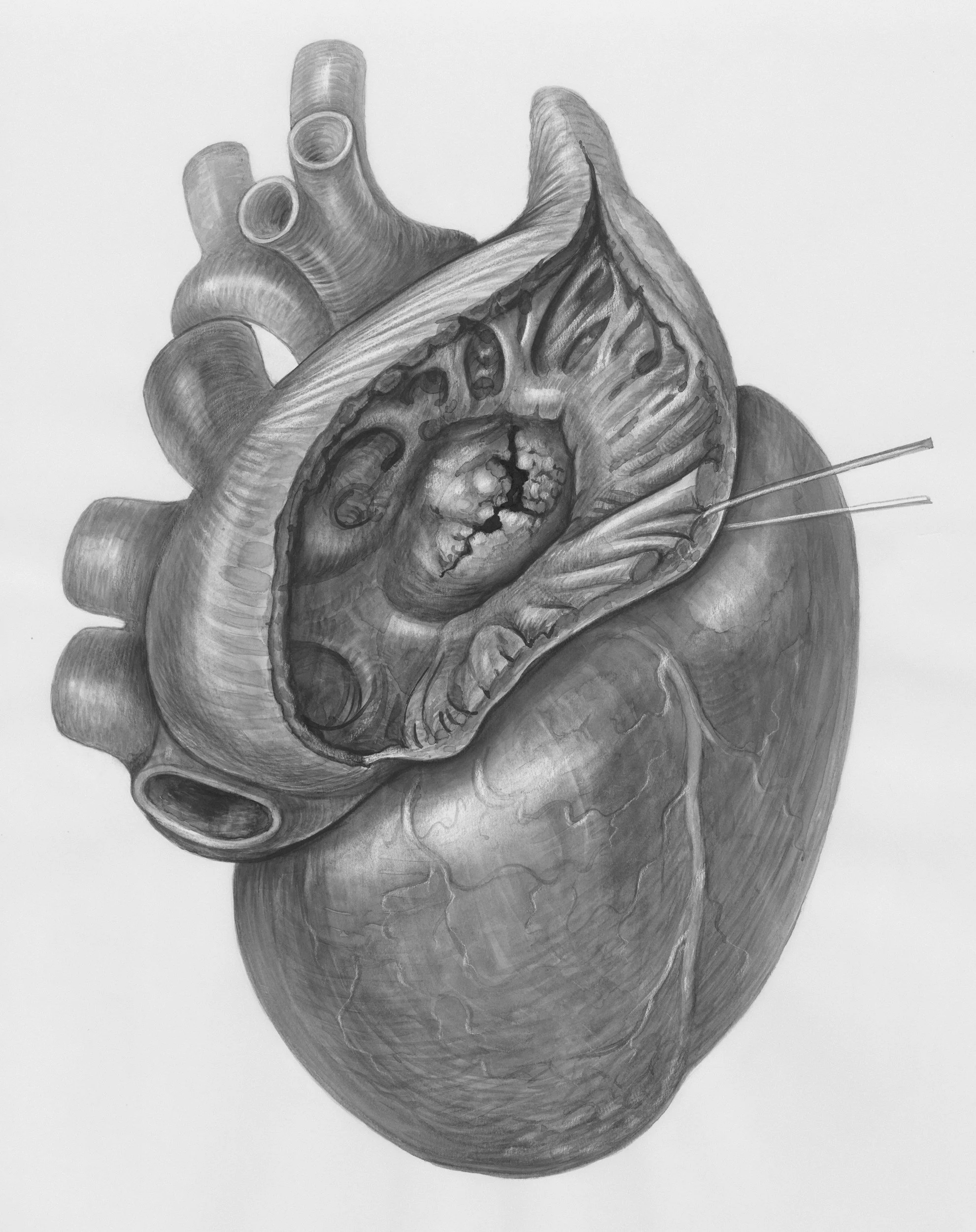
The heart is the central drum of the body, the rhythmic intelligence that sends blood, breath, and meaning through every organ and every cell. With each beat, it generates an electrical field that extends far beyond the body, coordinating internal systems with an effortless coherence. The heart does more than circulate oxygen and nutrients. It senses, communicates, synchronizes, and responds. It is the only organ whose rhythm can entrain the entire nervous system, shifting the body into alignment with a single moment of truth.
Surrounding it is the pericardium: the heart’s shield, a protective sac that absorbs impact, supports movement, and regulates how experience reaches the heart. It is both anatomical and energetic. The pericardium ensures that the heart receives what nourishes it and filters what could overwhelm it. Across healing traditions, it is recognized as the guardian of tenderness, emotional boundaries, and relational safety.
Energetically, the heart chakra carries the element of Air; the element of breath, spaciousness, truth, and connection. Air governs how freely emotion moves through the body, how openly we connect with others, and how gracefully we release what cannot stay. When the heart is open and coherent, breath deepens, the diaphragm softens, and the entire midline communicates as one. When the heart contracts or shields itself, the diaphragm tightens in response, breath rises, and the body instinctively protects what feels vulnerable.
Common Ailments of the Heart and how to bring healing to them
-
Heart contraction presents as tightness in the chest, shallow upper-chest breathing, difficulty accessing emotion, or a sense of being closed or guarded. Physiologically, this may correspond to elevated sympathetic tone, increased heart rate, or diminished heart-rate variability. Energetically, it reflects a heart that has withdrawn its openness for protection: A temporary narrowing of the bridge between upper and lower worlds so the person can feel safe.
Healing Tools:
Physical: Gentle chest-opening stretches, slow nasal breathing, and vagal toning exercises.
Herbal: Heart-softening herbs such as hawthorn, rose, linden, and motherwort.
Energetic: Place hands at the center of the chest and breathe into a widening field around the heart.
Ritual: Speak aloud, “I soften only where it is safe for me to soften,” honoring the heart’s wisdom rather than overriding it.
-
Pericardial tension manifests as a band of tightness beneath the sternum, difficulty taking a full breath, or the feeling of wearing emotional armor. Anatomically, the pericardium may stiffen due to chronic stress patterns. Energetically, this is the heart’s shield working overtime; filtering emotion, intercepting overwhelm, or protecting tenderness that was once exposed before it was ready.
Healing Tools:
Physical: Gentle rib-cage mobilization, myofascial release along the sternum, and paced breathing into the upper diaphragm.
Herbal: Nervines and harmonizers such as tulsi, lemon balm, and linden to soften sympathetic firing.
Energetic: Sweep from shoulders to sternum to release protective gripping; tap CV 17 (Sea of Tranquility) to open the heart field.
Ritual: Place a warm cloth over the chest and invite the shield to rest, affirming, “Thank you for protecting me. You may soften now.”
-
Grief that has not been metabolized often settles in the cardiothoracic space. (Usually lungs) This may look like heaviness, sighing, tearfulness without release, or difficulty staying present in the chest. Physiologically, grief alters breath rhythm and autonomic tone. Energetically, the heart contracts around old loss to prevent re-injury, while the pericardium holds the emotional residue.
Healing Tools:
Physical: Breath-led movement practices, walking meditation, and slow exhalations to release emotional pressure.
Herbal: Hawthorn flower, linden blossom, rose, and milky oat tops for emotional repair.
Energetic: Gentle tapping over the sternum to awaken circulation through the heart field.
Ritual: Name the loss. Place hands over the heart and speak gratitude for its endurance.
-
Some individuals unconsciously absorb the emotions of others into the heart field. Symptoms include sudden chest tightness in the presence of certain people, emotional fatigue, or feeling “full” in the chest without clear cause. Physiologically, this reflects stress or autonomic overload. Energetically, it is a permeability in the heart field where the pericardium cannot buffer what is incoming.
Healing Tools:
Physical: Slow breathing paired with gentle shaking of the hands and arms to break empathic resonance loops.
Herbal: Protective allies like rosemary, tulsi, and hawthorn.
Energetic: Create a boundary by tracing a circle around the chest and imagining the heart flame contained but luminous.
Ritual: After interactions, sweep hands down the midline and whisper, “What is not mine returns to its source.”
-
Some hearts open faster than the body can integrate. This can create emotional flooding, chest aching, or tenderness that feels raw rather than supportive. Physiologically, this can reflect dysregulated nervous-system activation. Energetically, the heart is reaching wide while the pericardium attempts to slow the expansion for safety.
Healing Tools:
Physical: Grounding practices: weighted blankets, low-body movement, or pressure through the feet.
Herbal: Grounding herbs such as ashwagandha, skullcap, and chamomile.
Energetic: Anchor the heart by visualizing a cord running from chest down into the earth.
Ritual: Sit with palms on thighs and speak, “I expand only at the pace my body can hold.”
-
Non-cardiac chest pressure often comes from muscular tension, breath dysregulation, pericardial bracing, or emotional load. Energetically, it is the body signaling that attention is needed; not crisis, but care.
Healing Tools:
Physical: Gentle stretching of pecs and upper ribs, intentional slow breaths, hydration, and posture reset.
Herbal: Calming herbs and circulatory tonics like hawthorn leaf and flower.
Energetic: Touch sternum lightly and visualize breath moving pressure outward like ripples in water.
Ritual: Press one hand to the heart and say, “I am listening.”

INTRODUCING SOULA
Soula has been one of my most profound mentors; a teacher whose presence reshaped the way I understand the heart and its intelligence. He carries a depth of lived experience that cannot be taught in textbooks, only transmitted. His work moves through the heart’s wisdom with clarity, precision, and an authenticity that has guided me through some of my most important initiations.
What follows is his teaching.
Receive it the way the heart learns; through openness, breath, and resonance.
SOULA TEACHING
The RIBCAGE:
THE VESSEL OF BREATH AND PROTECTION
Element: Air (Wood in TCM)
Chakra: Heart (primary), Solar Plexus (secondary)
Primary Meridians: Lung, Heart, Pericardium
Emotional Archetype: The Guardian
Anatomy and Function
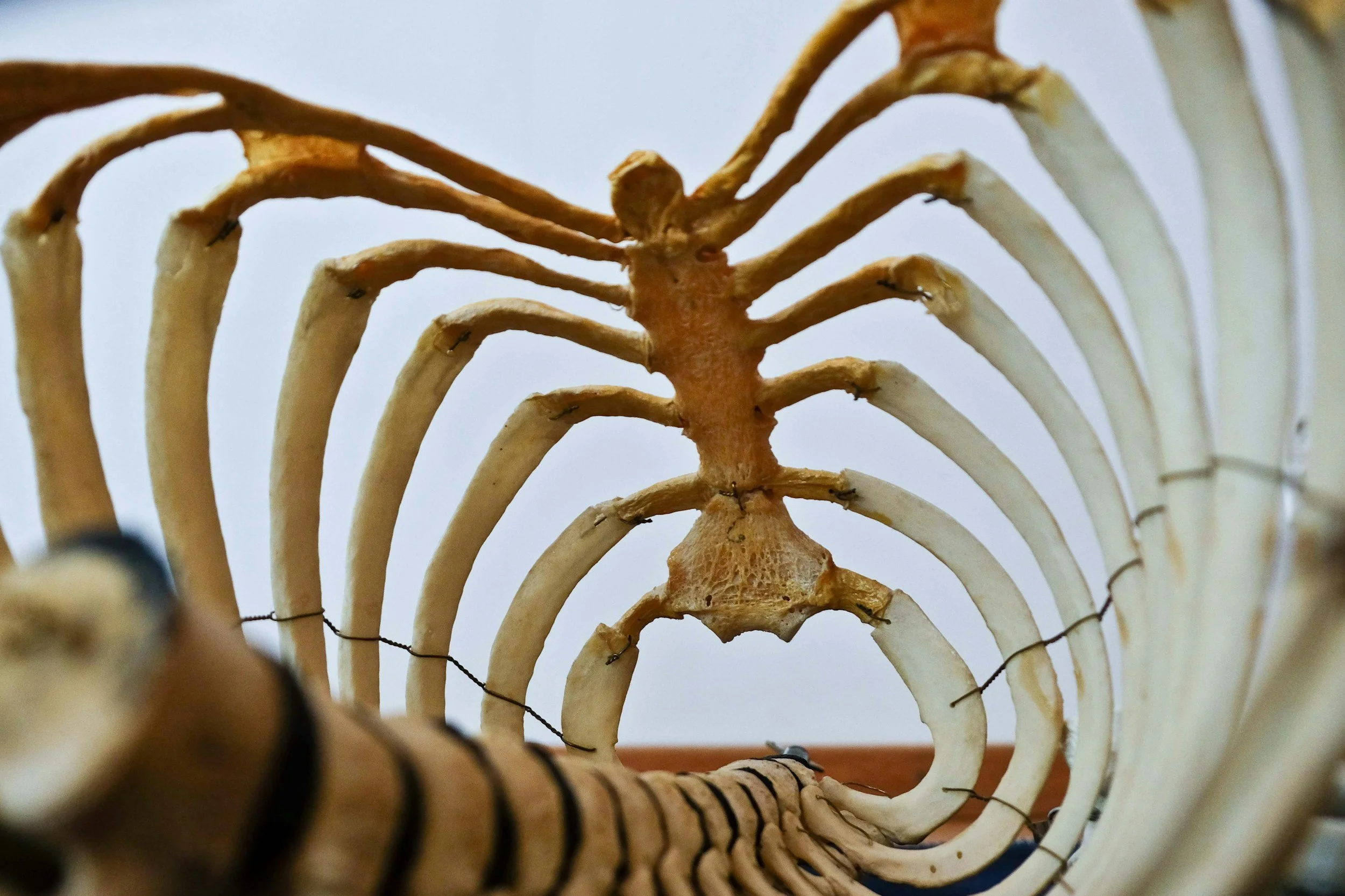
The ribcage is a living architecture of protection and movement, formed by the sternum, twelve thoracic vertebrae, and twelve pairs of ribs that rise and fall in an intricate dance with every breath. Though often imagined as a static cage, the ribcage is exquisitely dynamic. Its structure expands, rotates, widens, and narrows in a coordinated rhythm that shapes respiration, posture, circulation, and the tone of the entire cardiothoracic field.
Each inhalation relies on two primary rib mechanics.
In the pump-handle motion, the upper ribs lift forward and upward, increasing the chest’s front-to-back space. In the bucket-handle motion, the lower ribs swing outward and upward, widening the lateral dimensions of the thorax. Together these movements create the three-dimensional expansion needed for full lung inflation, healthy diaphragm descent, and the pressure gradients that support lymphatic flow and venous return.
The ribcage also serves as the protective vault for the heart, lungs, and great vessels. Its mobility influences everything these organs do; from the lungs’ alveolar expansion to the heart’s electrical coherence. When the intercostal muscles are pliable and the ribs glide freely, breath deepens, circulation improves, and the heart field expands with ease. When the ribcage is restricted through stress, posture, injury, or emotional guarding, breath becomes shallow, the diaphragm shortens, and the thoracic cavity narrows around the body’s most vital structures.
In energetic traditions, the ribcage is understood as the vessel that holds the heart’s truth and the lungs’ capacity to receive and release. It opens when safety is present, and it contracts when the body prepares to protect itself. Its movement is both mechanical and emotional, a visible expression of how deeply we allow life in and how courageously we let life move through us.
COMMON AILMENTS OF THE RIBCAGE AND HOW TO BRING HEALING TO THEM
-
Intercostal tension reduces the ribcage’s ability to expand and contract, limiting breath depth and altering the mechanics of the diaphragm. Clients may report sharpness between the ribs, difficulty inhaling fully, or a sense of compression around the heart or lungs. Energetically, this pattern reflects guardedness; ribs tightening to protect vulnerability or brace against emotional impact.
Healing Tools:
Physical: Intercostal stretching, side-bending, thoracic mobility work, heat therapy.
Herbal: Anti-spasmodic allies like chamomile, cramp bark, or magnesium-rich herbs.
Energetic: Gentle sweeping or tapping along the rib spaces to restore flow.
Ritual: Place hands on the lower ribs, inhale into expansion, and speak, “I allow space where space is needed.”
-
When the thoracic spine becomes stiff, rib movement diminishes, compromising lung expansion, shoulder mechanics, and diaphragm descent. Clients may experience shallow breathing, tension in the upper back, or postural collapse. Energetically, thoracic rigidity often reflects emotional holding. This is carrying weight on the back or bracing against overwhelm.
Healing Tools:
Physical: Thoracic extension exercises, foam-roller mobilizations, posture resets.
Herbal: Warming circulatory herbs like ginger or cinnamon to increase mobility.
Energetic: Visualization of the spine softening and lengthening with breath.
Ritual: Standing tall, inhale up the spine and exhale down it, reestablishing vertical flow.
-
Pain around the sternum or costochondral junctions may arise from inflammation, overuse, emotional compression, or poor breathing mechanics. Clients often mistake this for heart-related distress. Energetically, this center corresponds with vulnerability and truth-telling: tension here may appear during periods of emotional suppression or when the heart is holding more than it can voice.
Healing Tools:
Physical: Gentle chest-opening stretches, heat pack over the sternum, slow rib expansion exercises.
Herbal: Anti-inflammatory herbs such as turmeric, boswellia, and linden. I love cacao oil over the sternum
Energetic: Light tapping at the sternum to awaken circulation and soothe guarding.
Ritual: Place one hand over the center of the chest and speak aloud one truth the heart has been holding silently.
-
When a rib becomes restricted or slightly misaligned, clients may feel sharp pain with inhalation, twisting, or lifting. This is often accompanied by intercostal muscle spasm and protective guarding. Energetically, this can reflect a sudden emotional jolt…something that “took the breath away.”
Healing Tools:
Physical: Gentle manual therapy from a trained practitioner, heat, slow diaphragmatic breathing, and positional release.
Herbal: Anti-spasmodics such as kava or skullcap for temporary support.
Energetic: Visualization of the rib gliding smoothly with each breath.
Ritual: Breath into the area and ask, “What startled you, and what do you need now?”
-
Chronic stress, screen posture, or tension patterns can shift breathing into the upper chest, overworking the intercostals and reducing rib mobility. Over time, this creates fatigue, anxiety patterns, and decreased oxygenation. Energetically, this reflects a body living in vigilance rather than expansion.
Healing Tools:
Physical: Belly-to-rib breathing, posture corrections, gentle stretching of pecs and scalenes.
Herbal: Nervines such as lemon balm, tulsi, or milky oats.
Energetic: Breathing with hands on the ribs, inviting expansion with each inhale.
Ritual: Inhale for four counts, exhale for six, inviting the body into safety.
-
The ribcage responds instantly to emotional threat by tightening, narrowing, or holding breath. This is especially common in those who have endured long-term stress, grief, or environments where vulnerability was unsafe. The ribs may feel rigid, unresponsive, or chronically tight. ( I see this in people with trauma and abuse histories)
Healing Tools:
Physical: Somatic shaking, rhythmic movement, slow intercostal mobilization.
Herbal: Heart-softening allies like rose and hawthorn to ease emotional tension.
Energetic: Sweep from shoulders down the ribs to clear protective gripping.
Ritual: Speak to the body: “You do not have to guard so tightly anymore.”
-
Rib injuries; whether bruised, fractured, or strained, create sharp, localized pain that intensifies with breath, rotation, coughing, or pressure. Because the ribs move with every inhale, these injuries are slow to heal and often accompanied by protective muscular guarding in the intercostals, serratus, and thoracic spine. Physiologically, inflammation and micro-instability limit rib movement; energetically, the body contracts around the site of injury to shield the heart and lungs from further impact.
Healing Tools:
Physical: Rest, anti-inflammatory support, bracing only when medically indicated, and gentle breathing exercises that keep the lungs expanding without aggravation. As pain subsides, slow rib mobility restoration under practitioner guidance. I also love red light, PEMF and laser therapy
Herbal: Arnica, turmeric, and boswellia for inflammation; magnesium to ease protective muscle gripping.
Energetic: Soft hand placement near (not on) the injury, visualizing space and light around the rib to reduce guarding.
Ritual: Inhale gently into the area and whisper, “I mend with patience,” honoring the slower pace of bone and connective tissue repair.

THE VASCULAR WEB:
THE CIRCULATORY INTELLIGENCE OF THE HEART SPACE
Element: Air (in the Heart Space)
Chakra: Heart
Primary Meridians: Heart, Pericardium
Emotional Archetype: The River of Truth, The One Who Gives and Receives
Anatomy and Function
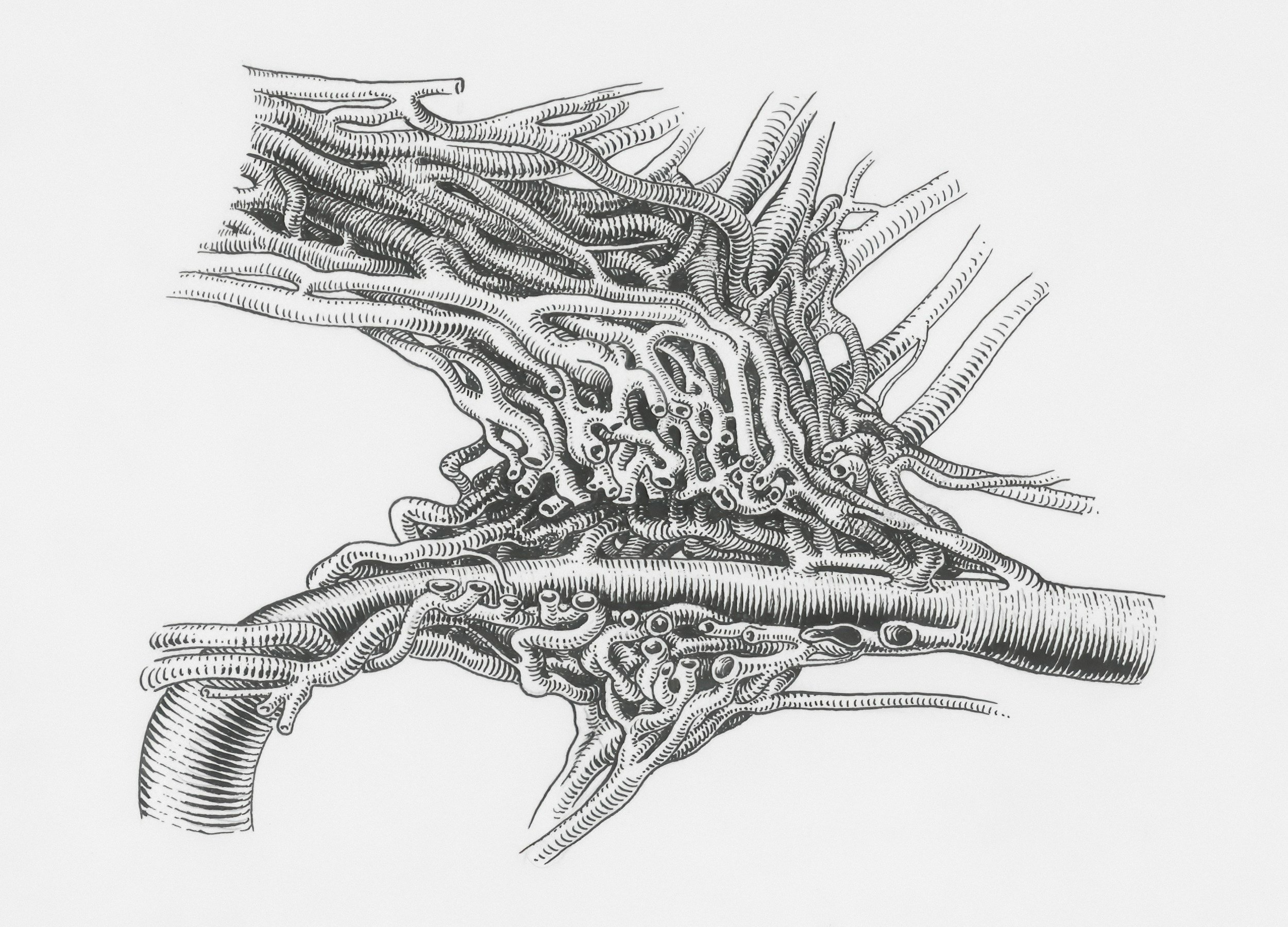
The vascular system of the thorax is a living river network, beginning at the heart and branching into millions of pathways that sustain every breath and every moment of life. At its center is the aorta, the body’s great artery, carrying oxygen-rich blood from the left ventricle into the ascending arch and downward into the thoracic cavity. From here, arteries divide into smaller branches, feeding the lungs, chest wall, pericardium, diaphragm, and every structure that surrounds and protects the heart.
As the vessels narrow into arterioles and then capillaries, the thoracic tissues receive oxygen and nutrients while releasing carbon dioxide and metabolic byproducts. This exchange mirrors the emotional function of the heart chakra: taking in what nourishes and releasing what drains or constricts. Capillaries are the meeting point where internal and external worlds touch: where the body negotiates what it will carry and what it will release.
Deoxygenated blood returns through the venous system, gathering into the superior and inferior vena cava, the great rivers that bring blood back home to the right atrium. Venous return in the thorax depends on breath, posture, diaphragm movement, and emotional tone. Every inhale draws venous blood upward; every exhale softens resistance. When breath is shallow or guarded, venous return slows, setting off ripples of stagnation throughout the thoracic field.
The vascular system is more than plumbing. It is an emotional landscape.
Arteries correspond with expression; how life force moves outward, how confidently we step into the world. Veins reflect receptivity and trust; the willingness to return, to be held, to be met. Capillaries reflect boundaries; the delicate interface where giving and receiving must be balanced or the tissues themselves begin to protest.
In energetic traditions, the thoracic vessels are understood as extensions of the heart’s truth. They expand when the heart field is coherent and contract when the system braces against overwhelm. They mirror a person’s relational patterns, how freely love moves, how safely emotion circulates, how easily nourishment travels where it is needed.
When the vascular web is fluid, the heart space feels open. Breath moves easily. The chest feels warm and alive. When it becomes constricted by stress, fear, grief, or emotional stagnation, blood flow diminishes, tissues tighten, and the heart field loses its natural radiance.
The vessels of the thorax are therefore not only conduits of blood but carriers of information; mapping how life moves through us, how we metabolize emotion, and how the heart communicates its needs to the rest of the body.
COMMON AILMENTS OF THE THORACIC VASCULAR SYSTEM AND HOW TO BRING HEALING
-
When the vascular flow through the thorax slows, clients may feel coldness in the extremities, chest heaviness, fatigue, or difficulty taking a full breath. Physiologically, this can arise from limited rib mobility, shallow breathing, or reduced diaphragm descent. Energetically, stagnation reflects emotional congestion; places where truth, grief, or relational tension has restricted the heart’s natural flow.
Healing Tools:
Physical: Breath-led rib mobility, gentle cardiovascular activity, and posture work to open thoracic space.
Herbal: Circulatory allies like hawthorn, gingko, rosemary, and mild warming herbs.
Energetic: Visualize blood flow as a warm river moving outward from the heart.
Ritual: Place hands on the heart and whisper, “Let what needs to move, move.”
-
Non-cardiac chest pressure often arises from muscular tension, pericardial guarding, or reduced venous return. The person may describe a weight on the chest or difficulty expanding fully. Energetically, this reflects emotional load; the heart carrying more than it can comfortably move through its field.
Healing Tools:
Physical: Slow diaphragmatic breathing, gentle pec opening, hydration, and movement.
Herbal: Nervines and heart harmonizers such as linden, rose, and hawthorn flower.
Energetic: Tap lightly over the sternum to release pericardial tension.
Ritual: Speak aloud, “I release what is not mine to carry.”
-
When venous return weakens, the body may show swelling in the chest wall or upper extremities, fatigue, or a sense of heaviness on exhale. Breath mechanics strongly influence this, as inhalation acts as a pump for venous return. Energetically, this pattern reflects difficulty receiving; a heart that gives freely but struggles to let nourishment return.
Healing Tools:
Physical: Strengthen diaphragm movement, improve posture, and encourage slow aerobic activity.
Herbal: Minerals, hydration, and herbs that support fluid dynamics: nettle, dandelion leaf, calendula.
Energetic: Practice receiving breath with intention: inhale while saying “I allow.”
Ritual: Place one hand over the heart and one over the lower ribs, imagining breath pulling energy gently upward
-
Capillary dysfunction decreases oxygen exchange and can create fatigue, brain fog, or heaviness through the thorax. This often follows chronic stress, inflammatory load, long illness, or toxic exposures. Energetically, this pattern mirrors emotional depletion; too many asks, too few returns, the body giving until the smallest vessels protest.
Healing Tools:
Physical: Gentle interval walking, contrast hydrotherapy, red light therapy
Herbal: Antioxidants (schisandra, amla, green tea), circulatory tonics, and nitric oxide supports (beetroot).
Energetic: Envision breath moving through the tiny rivers of the chest, relieving pressure and restoring vitality.
Ritual: With each inhale imagine drawing vitality into the smallest spaces; with each exhale imagine old stagnation leaving the body.
-
The vascular system responds immediately to emotional states. Fear, grief, heartbreak, or long-term stress can constrict vessels, decrease perfusion, and alter the rhythm of breath. Clients may feel cold hands, an aching chest, or surges of emotion that don’t fully release. Energetically, this is the heart’s river narrowing in self-protection.
Healing Tools:
Physical: Slow coherent breathing, gentle movement, chest expansion exercises.
Herbal: Rose, hawthorn, motherwort, and nervine blends to soften emotional pressure.
Energetic: Sweep hands outward from the sternum to widen the heart field.
Ritual: Sit with both hands on the heart and speak, “I allow myself to open at a pace that is safe.”
-
Chronic stress elevates sympathetic tone, tightening vessels and creating chest discomfort, racing thoughts, or reduced breath depth. This is both physiological and energetic; the heart field contracts, and the vascular network follows.
Healing Tools:
Physical: Coherence breathing (5–6 breaths per minute), grounding exercises, gentle stretching.
Herbal: Reishi, tulsi, linden, and other calmative allies to support parasympathetic tone.
Energetic: Place one hand on the heart and one on the belly to synchronize upper and lower body rhythms.
Ritual: Light a candle or hold a small stone and breathe until the breath slows naturally.
ADVANCED: SHAMANIC ANATOMY OF THE HEART’S RIVERS
-
Blood is the one substance in the body that visits nearly everything. It moves through the lungs to receive breath, through the gut to gather nourishment, through the liver to metabolize story and toxin, through the kidneys to filter, through the brain to feed thought and perception. Because of this, many shamanic lineages regard blood as the carrier of agreements. It holds the imprints of what we have consented to consciously and what we have carried unconsciously: vows, loyalties, burdens, lineages, and love.
At the center of this web is the heart, not just as a pump, but as a spiritual council fire. Every beat is a drum strike that decides: what moves forward, what returns to be processed, what is held closer, what is released.
From that council fire, the aorta is the great outgoing river. It represents the choice to live outwardly. In shamanic reading, the strength and freedom of this river mirror how a person steps into the world with their life force. When the aorta flows, there is a sense of direction, purpose, and forward movement, even if the path is not fully known. When this current feels energetically constricted, there is often a deeper story: generations of being punished for shining, vows of invisibility, or a life built on survival that left no room for true expression. The aorta carries the imprint of the decision to exist fully.
The arteries are pathways of will and expression. They do not ask permission. They move blood with assertion, a clear yes that travels outward from the heart. In shamanic interpretation, constricted artery fields can point to places where a person has learned to mute themselves: cultures of silence, families where speaking truth brought rupture, spiritual or religious conditioning that demanded obedience over authenticity. Overly forceful arterial fields, on the other hand, can reflect a life lived in overcompensation: pushing, striving, forcing, trying to outrun old pain rather than move in harmony with truth.
The veins tell another story altogether. They are the pathways of return. Veins show how the world is allowed back in: support, nourishment, money, care, affection, rest. Many hearts have learned to give without limit but find it almost unbearable to receive. In those bodies, the shamanic pattern often shows as venous stagnation. The blood trying to come home meets walls of belief: “I am too much,” “I am not worthy,” “Everyone else comes first.” The venous side of the river then becomes heavy, slow, reluctant. Physically this may look like congestion and fatigue. Energetically it looks like a life where love goes out easily but rarely lands fully in the chest.
The capillaries are where things get intimate. These tiny vessels are the boundary line, the sacred shoreline where blood meets tissue. Here is where exchange becomes precise: oxygen traded for carbon dioxide, nutrients for waste. In shamanic language, the capillary beds represent all of the small, daily negotiations of selfhood: What do I give here? What do I hold back? What do I let in? What price am I quietly paying to belong? When someone has lived a life of micro-betrayals, saying yes when their body says no, giving more than they have, enduring situations that erode them over time, it is often the capillary field that shows the first signs of subtle collapse. There is enough flow to survive, but not enough to thrive.
Then there are the great veins of return, the superior and inferior vena cava. These are the ancestral rivers. They gather all the blood from above and below, from brain and viscera, from limb and organ, and bring it back to the right side of the heart. In shamanic reading, this is where ancestral stories tend to surface. Patterns that repeat across generations, wounds that travel down the family, unfinished grief that never had a place to land: they often ride in on these rivers. The present-day heart becomes the meeting point where these currents arrive and ask to be acknowledged, altered, or released.
The thoracic vascular web also holds imprints of collective currents: war, famine, colonization, exploitation, systemic oppression. These forces move through families and communities, then through the blood of individuals who were born into those fields. In the chest, this can feel like a heaviness that is too large to name, a sorrow that seems older than any personal story. From a shamanic lens, this is not imagined. It is the plasma of history moving through the river of now.
Across all of these layers, one principle repeats:
Where the rivers narrow, something is trying to protect itself.
Where the rivers flood, something is trying to be seen.
Where the rivers stagnate, something is waiting to be released.
The thoracic vessels do not just carry oxygen and nutrients. They carry direction, consent, and story.
A heart that has been betrayed may narrow the outgoing rivers to prevent further loss. A heart that has been forced into servitude may keep the incoming rivers thin, refusing to receive from systems that have harmed it. A heart that has inherited vows of loyalty to suffering may unconsciously bind its rivers to others, pulling more weight than its own life requires.
In this advanced view, vascular work is not only about increasing circulation. It is about restoring right relationship between the heart and its rivers: what the heart chooses to feed, what it agrees to carry, what it allows to return, and what currents it finally releases back to Source.
Shamanically, when we listen to the thoracic vascular web, we are not just asking, “How well does blood move?” We are asking:
Where has this heart been asked to carry more than it was designed to carry?
Where has it been punished for its flow or its fire?
Where have the rivers been bound by contracts that no longer serve?
Where is life asking to move differently now?
This is why the vascular system belongs in the heart chakra medicine. It is the embodied record of how a person has participated in the flow of life: giving, receiving, belonging, sacrificing, surviving, and, eventually, choosing to live in a way that honors the truth of their own heart.

Breathe with me, and I will teach you how to open without losing yourself
-The Winds