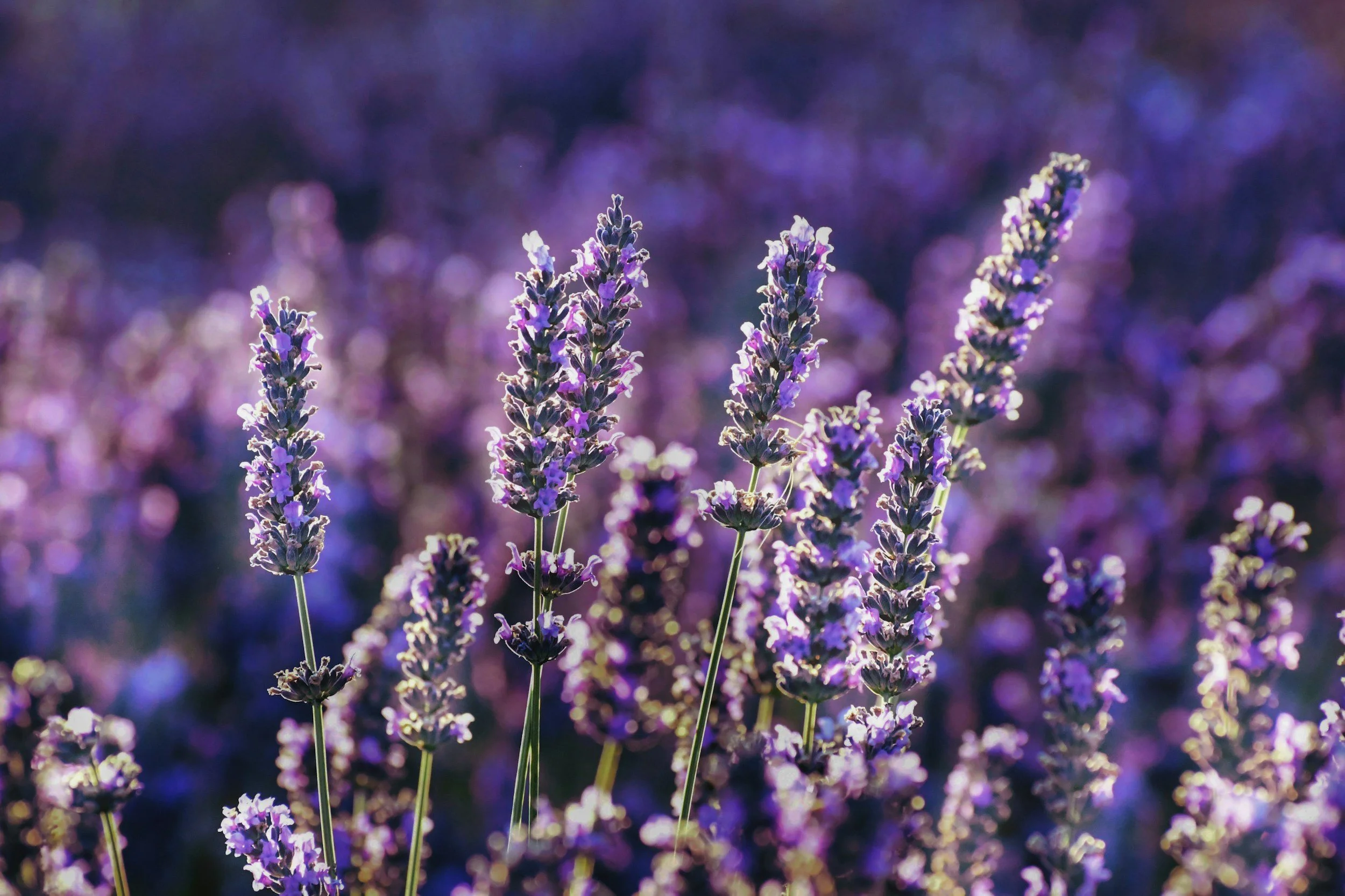
Lavender
The Master Weaver
Child,
Soften your grip. I will weave the noise back into rhythm, so your breath can remember its way home and your mind can rest inside the quiet truth it already knows.
-Lavender Plant Spirit
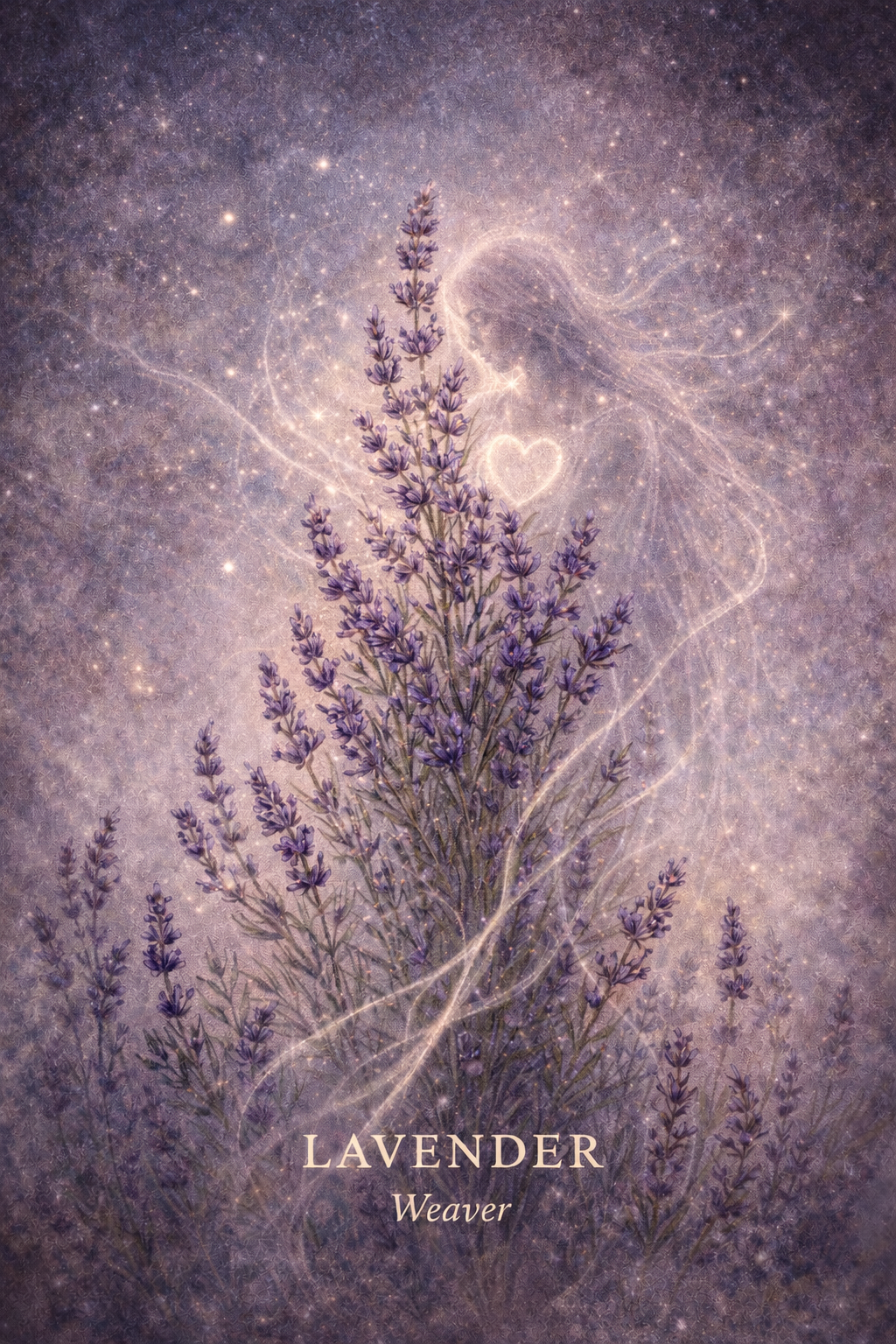
Lavender The Great Weaver
Lavender is an ancient medicine, one that has walked alongside humanity for more than two thousand years as a companion of cleansing, clarity, and remembrance. Its name comes from the Latin lavare, meaning “to wash,” and this is not merely a physical act. Lavender washes the subtle body. It clears residue left behind by stress, grief, vigilance, and overstimulation. Wherever the nervous system has learned to brace, Lavender moves gently through those fibers, loosening what has been held too tightly for too long.
In the ancient world, Lavender was not a casual herb. It was a sacred unguent. In Egypt, aromatic plants like Lavender were used in ritual cleansing, perfuming, and embalming, not only to preserve the body, but to prepare the spirit for passage. These plants were understood to hold liminal intelligence, capable of bridging worlds. (Just like the Raven) Sacred oils and salts infused with aromatics were reserved for royalty, priests, and ceremonial use, marking Lavender as a medicine of threshold moments, transition, and reverence.
The Greeks and Romans inherited this knowing and carried it into early medicine. Lavender was used internally to soothe headaches, digestive distress, menstrual pain, sore throats, and nervous agitation, and externally as a purifier for wounds and burns. Even then, its dual nature was recognized: Lavender calms, but it also clarifies. It settles the system without dulling perception. It brings lucidity, not sedation. This quality is what has kept Lavender in continuous use across centuries and cultures.
Lavender is a nervine, a term that speaks not only to chemistry, but to relationship. Nervines do not force change; they invite the nervous system back into coherence. Lavender works through scent, memory, and subtle signaling, helping the body remember how to rest, how to breathe, how to soften without collapsing. It supports sleep, yes, but more importantly, it restores rhythm. The inhalation of Lavender has long been associated with improved memory, mental clarity, and focused calm, making it a medicine for those whose minds are active, perceptive, and easily overstimulated.
Astrologically and energetically, Lavender is aligned with Mercury, the messenger, the connector, the translator between realms. Mercury governs perception, communication, and the intelligence of the nervous system. Lavender carries this same signature. It opens mental channels, refines thought, and clears interference so that communication can move cleanly, both internally and externally. It is also associated with Virgo, the sign of refinement, discernment, and sacred order. Lavender does not overwhelm; it edits. It removes excess. It restores simplicity.
Lavender also carries the medicine of Spider, the great Weaver. Spider teaches us how to organize complexity into meaningful pattern, how to draw many threads into a coherent web. Lavender works in the same way. It weaves together breath, thought, sensation, and emotion, restoring communication between parts of the system that have gone quiet or fragmented. When communication becomes misaligned, Spider warns us, we become entangled. Lavender helps loosen those knots, allowing energy to move again with intention.
Lavender- Full Spectrum of Use and Indications
(Historical, Traditional, and Contemporary)
Lavender has been used for thousands of years not because it excels at one thing, but because it moves between systems. Historically and in modern practice, Lavender appears wherever the nervous system, the mind, the heart, and the body are struggling to communicate with one another. It is a medicine for misalignment, overload, and internal noise.
Nervous System and Mental States
Lavender has long been used for states of nervous agitation, restlessness, and emotional overstimulation. This includes anxiety, tension, irritability, and nervous exhaustion, but also subtler presentations such as constant mental activity, racing thoughts, rumination, overthinking, and difficulty turning the mind off. It is helpful for insomnia, especially when sleep is disrupted by mental vigilance, early waking, vivid dreams, or inability to fully relax. Lavender has also been used historically and in modern contexts for melancholy, low mood, emotional fragility, and nervous shock, particularly when these arise from cumulative stress rather than acute trauma.
Lavender is frequently indicated for people who are highly perceptive, sensitive, intuitive, or mentally sharp, and who struggle with sensory overload. This includes headaches triggered by stress, light sensitivity, noise sensitivity, and the feeling of being “fried” or overwhelmed by information. It is also used to support memory, mental clarity, and focus when distraction or mental fatigue is present.
Digestive and Gut-Related Patterns
Lavender has been traditionally used for digestive discomfort that is driven by nervous system tension. This includes nausea, stomach fluttering, indigestion, gas, bloating, cramping, and loss of appetite associated with stress or emotional strain. It has been used for upset stomach, spasm, and gut discomfort that worsens during periods of anxiety or pressure. Lavender does not act primarily as a digestive stimulant; rather, it restores the neural rhythm that allows digestion to proceed normally.
Pain, Tension, and Somatic Holding
Historically and presently, Lavender has been used for headaches, particularly tension headaches and stress-related migraines. It is also used for muscle tension, tight neck and shoulders, jaw clenching, and body aches that worsen with stress. Lavender has been applied topically or aromatically for pain associated with nervous tension, minor inflammation, and somatic holding patterns.
Sleep and Circadian Rhythm
Lavender has been used across cultures to support sleep, not as a sedative but as a regulator of rhythm. It is helpful for difficulty falling asleep, staying asleep, restless sleep, and waking unrefreshed. It is particularly effective when sleep disturbance is linked to anxiety, overthinking, grief, or emotional overload. Historically, it has been placed in pillows, baths, and evening rituals to signal the body to rest.
Emotional and Heart-Centered States
Lavender has a long association with grief, sorrow, and emotional processing. It has been used to support individuals moving through loss, transition, heartbreak, and emotional shock. In medieval and Renaissance traditions, women massaged Lavender into the chest and breasts for pain, emotional distress, and physical discomfort. Lavender has been associated with supporting emotional openness without collapse, making it valuable for those who carry emotional weight quietly.
Hormonal and Reproductive Support
Traditionally, Lavender has been used to ease menstrual discomfort, including cramping, tension, headaches, and mood changes associated with the cycle, particularly when symptoms worsen under stress. It has also been used historically to support women postpartum and during periods of physical and emotional transition, including to support breast comfort and lactation in folk traditions. (it works VERY well for lactation personal clinical pearl)
Skin, Wound Care, and Topical Use
Lavender has been used extensively as a topical ally. Historically, it has been applied to minor wounds, burns, (great for kitchen burns) bites, and skin irritations for its cleansing and soothing properties. It has also been used for skin conditions that worsen with stress, including rashes, itching, and inflammatory flares. Lavender’s role in embalming and preservation in ancient cultures underscores its long-standing association with purification and protection.
Immune and Infection-Related Support
While not a primary immune stimulant, Lavender has been used traditionally to support the body during illness by easing restlessness, feverish discomfort, and nervous agitation that accompanies infection. It has been used as part of cleansing rituals during times of plague and epidemic, often in combination with other aromatic herbs to purify spaces and bodies.
Energetic, Spiritual, and Ceremonial Use
Lavender has been used ceremonially to cleanse spaces, bodies, and energetic fields. It is associated with purification, protection, and preparation for ritual. Lavender has been used in baths, smudges, oils, and perfumes to mark transitions, initiations, and sacred work. It is often used to clear residual emotional or energetic debris after intense experiences, ceremonies, or periods of upheaval.
Practitioner and Healer Support
Lavender has long been used by healers, midwives, priests, and practitioners to maintain clarity and nervous system resilience. It supports those who work with others’ emotions, trauma, or illness by helping prevent energetic entanglement and burnout. Lavender is often indicated when a practitioner feels scattered, overextended, or unable to fully disengage after sessions. I place a pouch of Lavender in my bra every day, very powerful plant spirit for mental state and protection from dense energies.
Modern-Day Applications
In contemporary use, Lavender continues to be applied for stress management, anxiety, sleep support, mood regulation, digestive discomfort, headaches, skin care, and emotional wellbeing. It is commonly used in integrative health settings, bodywork, psychotherapy adjuncts, palliative care, and trauma-informed practices to support nervous system regulation and safety.
How to Work With Lavender
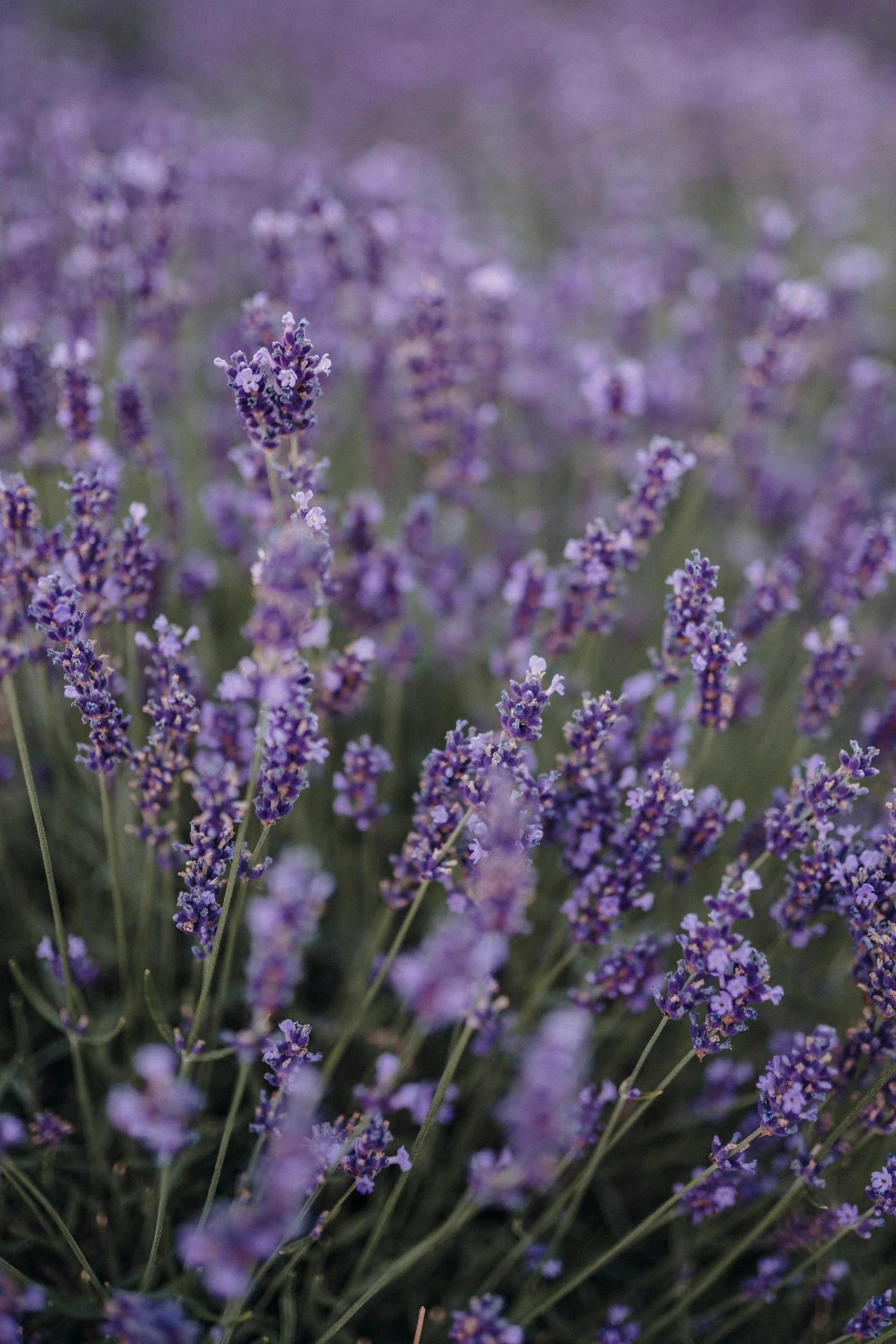
Lavender is one of the few herbs that meets people where they are, whether through scent, taste, touch, or ritual. Its medicine is adaptable, and how it is worked with matters. Each form invites a different doorway into its intelligence.
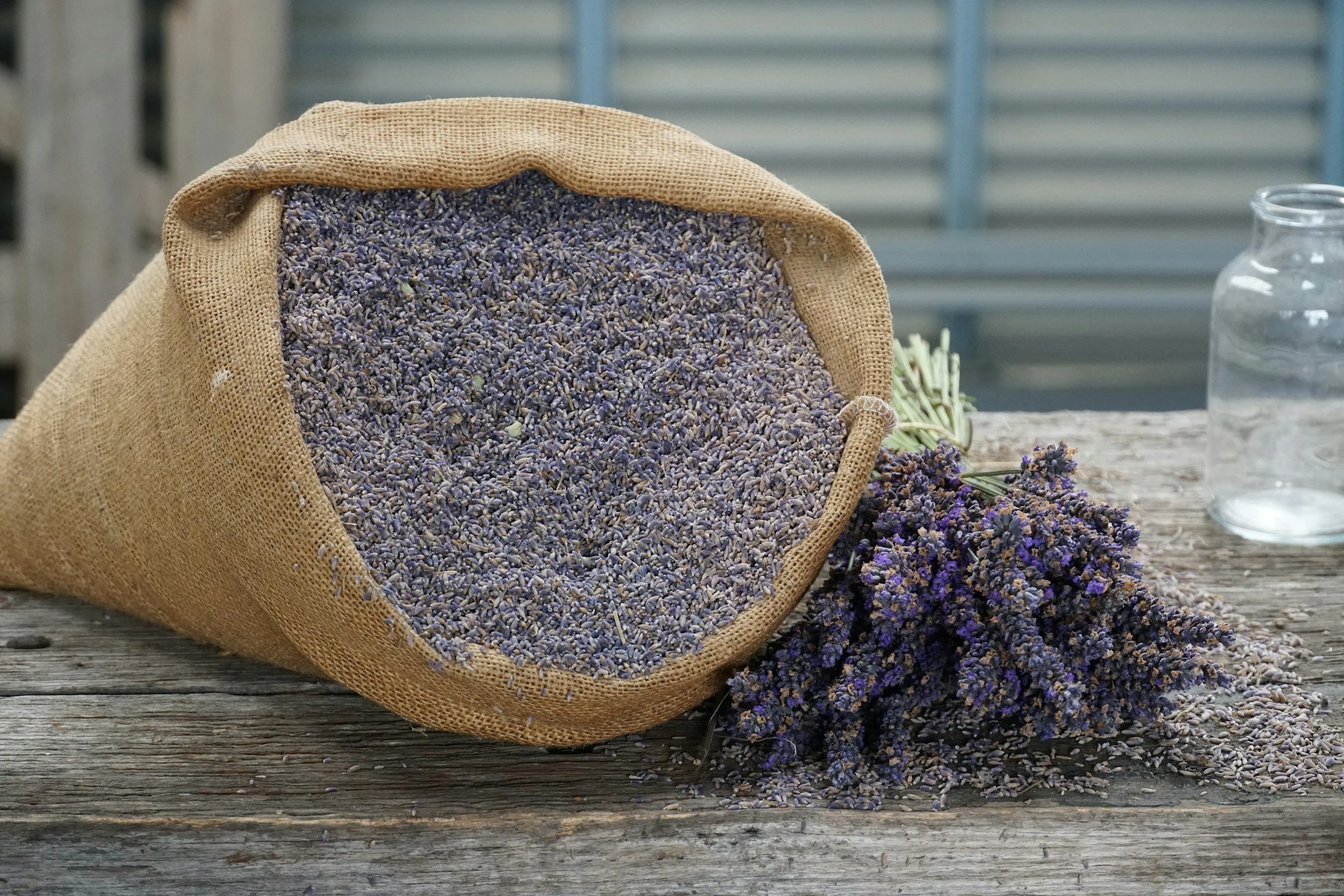
Lavender is most widely known through its aromatic expression, and for good reason. As an essential oil or dried flower inhaled through steam, sachet, or direct scent, Lavender bypasses cognition and speaks directly to the limbic system. This makes aromatic use especially effective for anxiety, stress, grief, shock, insomnia, and nervous system overload. The scent signals safety. It tells the body that it no longer needs to scan for threat. Aromatic use is ideal when someone feels overwhelmed, overstimulated, or unable to articulate what they are feeling. Lavender’s message arrives before words.
What many people do not realize is that Lavender is also a gentle and effective internal medicine. Taken as a tea or tincture, Lavender works from the inside out, calming the nervous system while also supporting digestion, mood, and sleep. As a tea, it invites ritual. The act of preparing and drinking Lavender tea slows the body, engages the senses, and allows the nervous system to soften gradually. Internally, Lavender is especially helpful for stress-related digestive symptoms, headaches, menstrual discomfort, emotional tension, and sleep disturbances driven by mental activity.
As a tincture, Lavender offers portability and precision. This form is useful for practitioners and clients who need steady nervous system support throughout the day without sedation. Tincture use allows Lavender to be layered with other herbs in formulas that support anxiety, digestion, or emotional regulation. It is often chosen when symptoms arise unpredictably or when ritual tea preparation is not practical.
Lavender can also be taken in capsule form, though this is less traditional and usually reserved for standardized preparations. Capsules offer convenience but remove the sensory relationship with the plant. In Oracle Medicine, capsules are considered supportive but not relational. They may be appropriate for those who need consistency but are not yet ready to engage with the plant more intimately.
Topically, Lavender is a powerful ally. Infused oils, salves, or diluted essential oil can be applied to the temples, neck, chest, abdomen, or feet. Topical use supports muscle tension, headaches, menstrual discomfort, skin irritation, minor wounds, and stress held in the body. Historically, Lavender was massaged into the chest and breasts to ease pain and emotional distress, reinforcing its relationship with the heart and upper centers.
Lavender baths are another ancient and potent method of use. Bathing with Lavender allows full-body nervous system regulation, making it especially helpful for grief, exhaustion, emotional overwhelm, or after intense experiences. Bathing signals the end of exertion and the beginning of rest. In ceremonial contexts, Lavender baths have been used to cleanse not only the physical body, but emotional and energetic residue as well.
In ceremonial and energetic contexts, Lavender is used to mark thresholds. It is burned, infused, or worn to cleanse space, prepare for ritual, and protect energetic boundaries. Lavender clears static from the field, making it an ideal ally before meditation, bodywork, ceremony, or sleep. It is often used at the beginning or end of spiritual work to ensure that what remains is integrated and what does not belong is released.
For practitioners, how Lavender is introduced matters as much as why. Lavender works best when offered as an invitation rather than a directive. Some clients respond immediately to its scent. Others prefer to drink it. Some need it in the evening to downshift; others benefit from it during the day to maintain coherence. Learning to notice how someone responds to Lavender in different forms is part of developing herbal discernment.
Lavender teaches that medicine does not need to be forceful to be effective. Whether inhaled, ingested, applied, or ritualized, its intelligence adapts to the doorway through which it is welcomed. The form is not incidental. It is part of the medicine.
Where to Source Lavender
The quality of Lavender matters. This plant is highly sensitive to growing conditions, harvesting methods, and preparation, and its medicine is most intact when sourced from ethical, small-batch producers who work in relationship with the plant.
For aromatic and topical use, I recommend Lavender essential oil from Wisdom of the Earth. Their oils are wildcrafted or responsibly cultivated, energetically clean, and produced with deep respect for plant intelligence. This makes them especially well-suited for nervous system work, ceremonial use, and subtle-body support. Wisdom of the Earth’s Lavender carries clarity without sharpness, making it appropriate for daily use as well as ritual application.
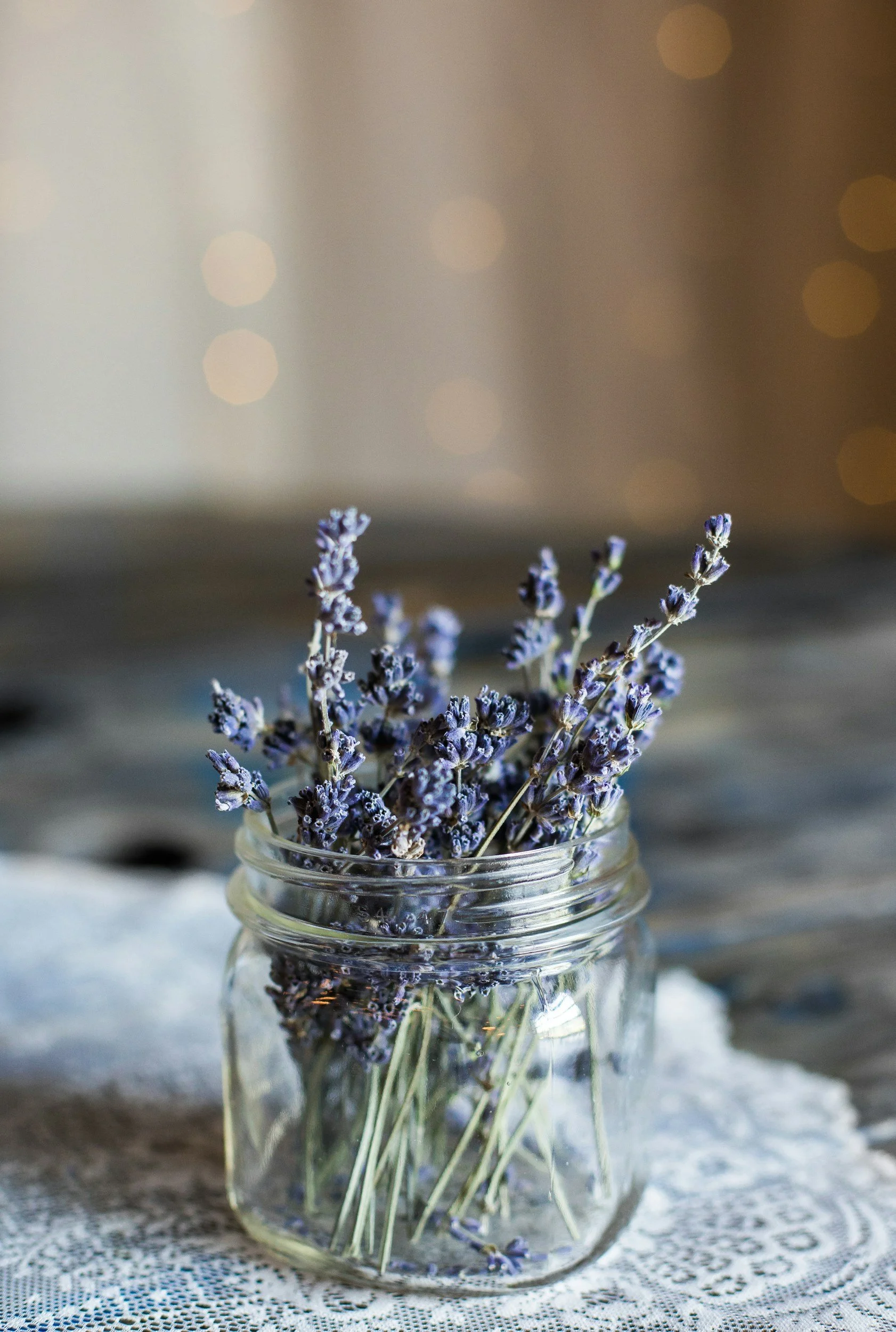
For internal use, I recommend dried Lavender flowers from Anima Mundi. Their herbs are organically grown or ethically wildcrafted, carefully dried, and handled in a way that preserves both potency and spirit. Anima Mundi’s Lavender is ideal for teas, baths, and ritual preparations, allowing you to work with the whole plant rather than an isolated extract.
Sourcing matters because Lavender works at the level of perception. When the plant is grown, harvested, and prepared with integrity, its medicine is clearer, more supportive, and easier for the nervous system to receive.