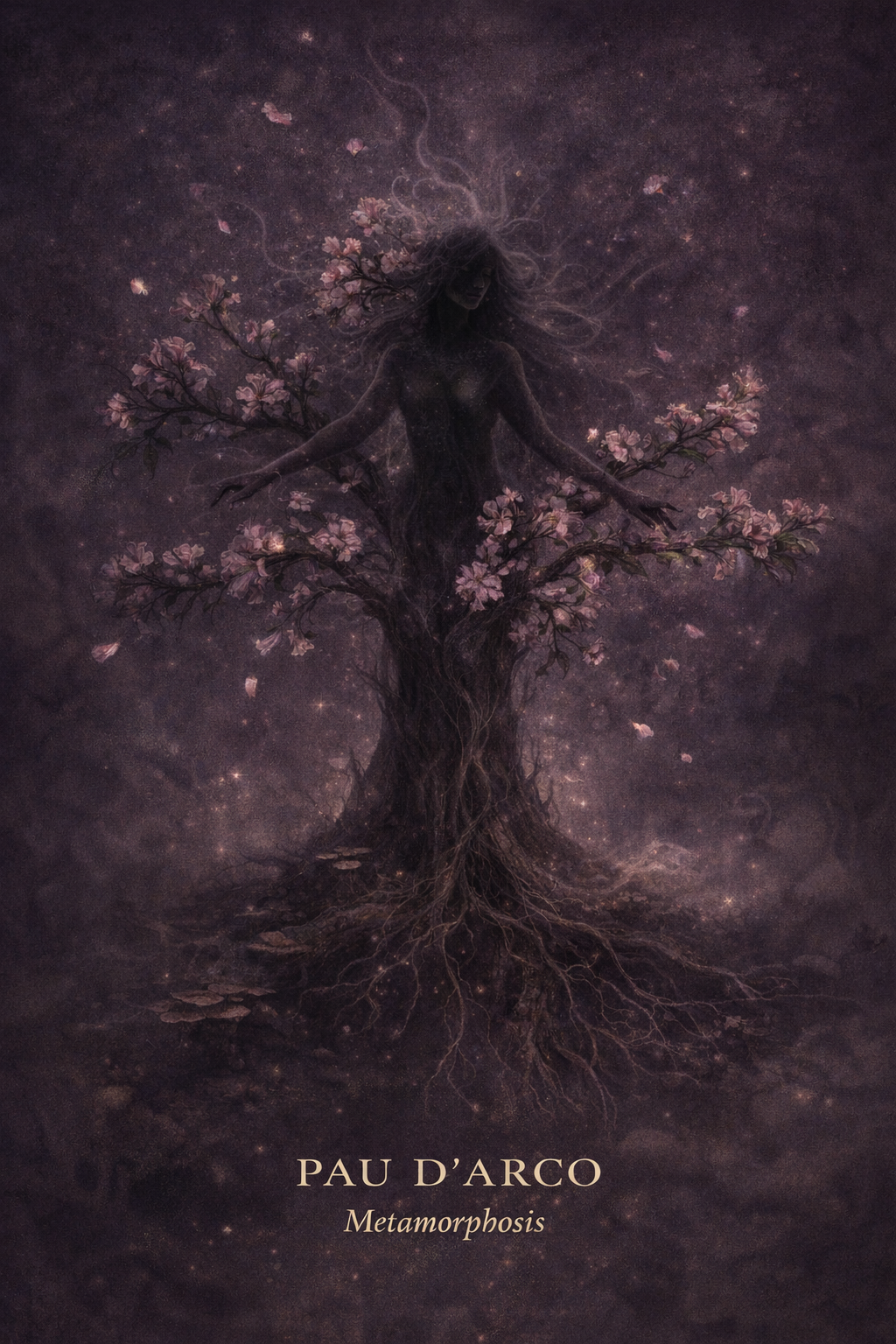
Pau D’ Arco
The Power of Metamorphosis
Enter the Dark Without Fear.
What disolves was never meant to come forward with you, and what remains will rise stronger, truer and unbound
-Pau D’ Arco Plant Spirit
Pau D’Arco, Triggering Metamorphosis
Lapacho | Taheebo | Tree of Heaven
Pau d’Arco is not an herb that whispers.
It arrives as a threshold guardian, a medicine of deep initiation, known across Central and South America long before modern naming systems attempted to contain it. Called Lapacho or Taheebo, this tree is one of the most revered and powerful plant allies in indigenous traditions, not because it comforts, but because it transforms.
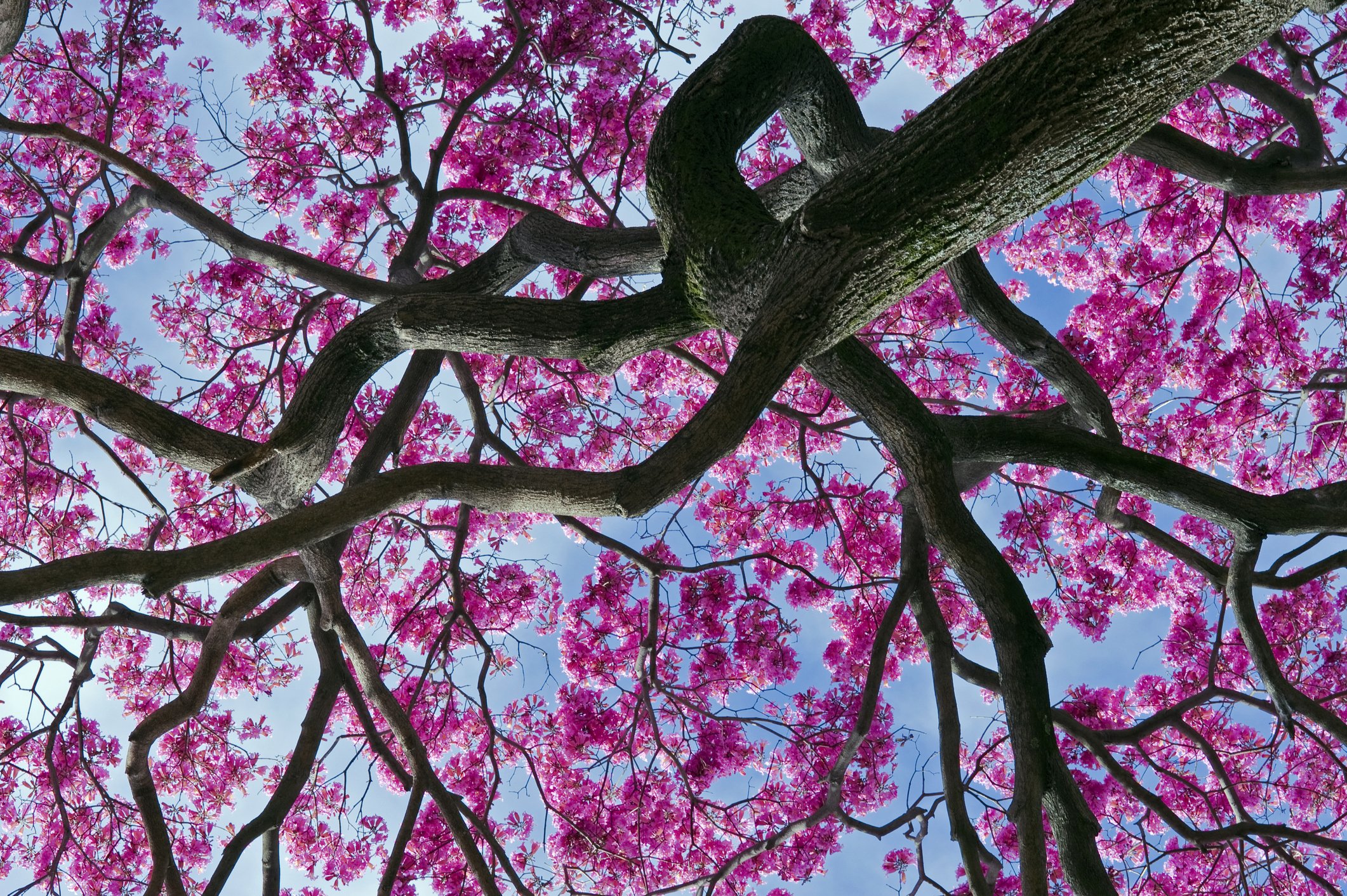
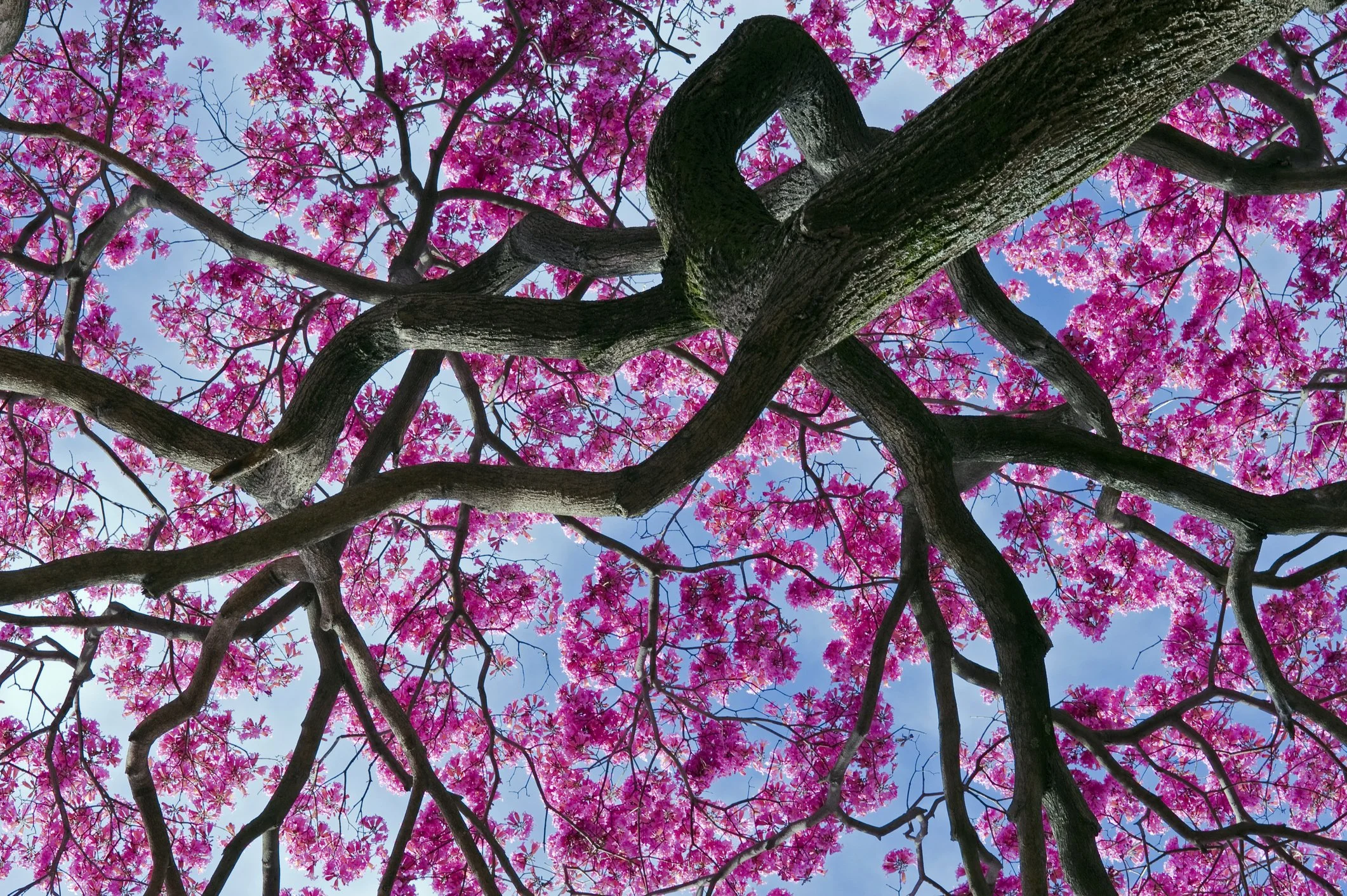
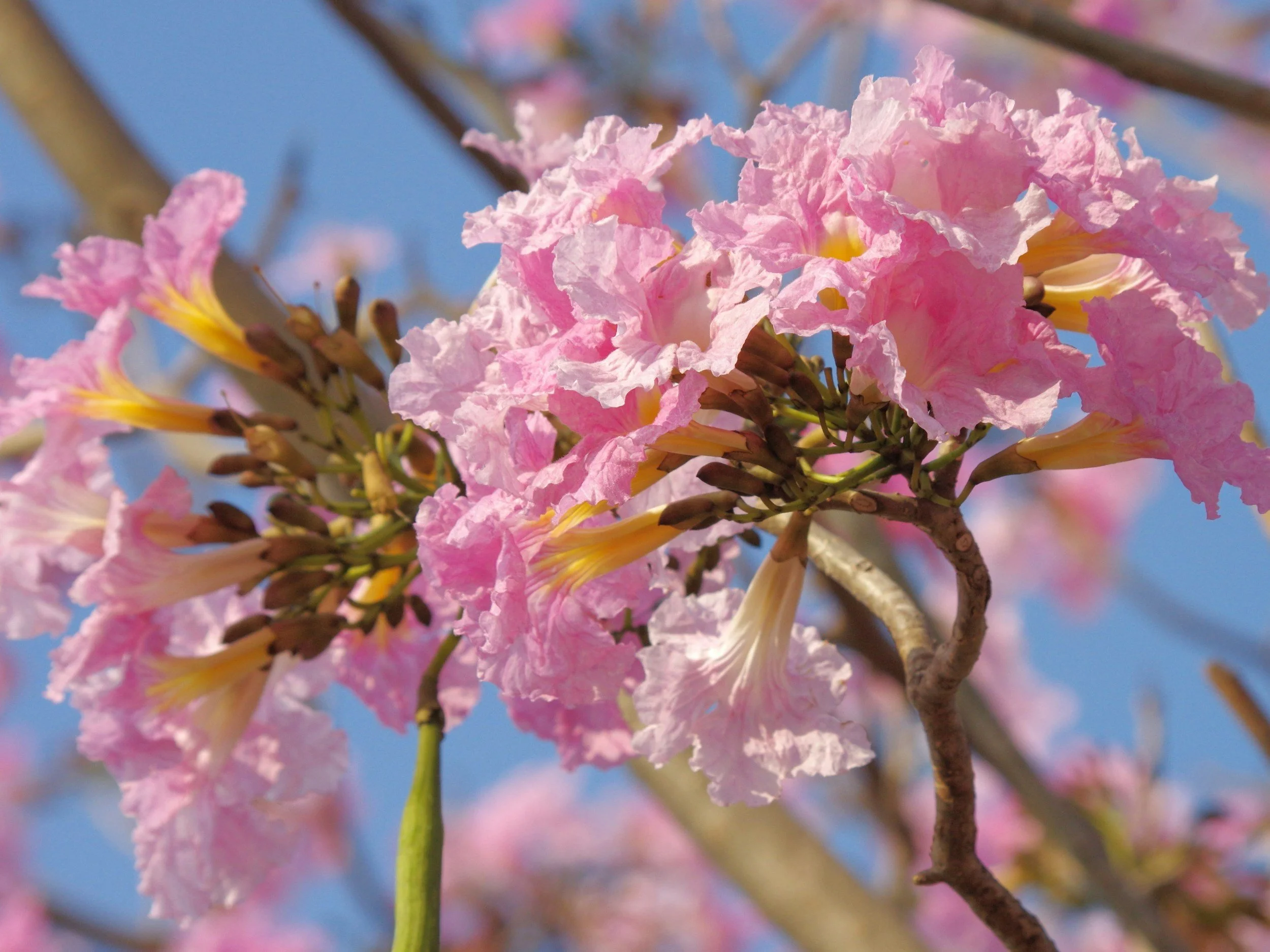
Lapacho trees are among the most striking beings in the forest. With over one hundred varieties, they stand as sentinels of endurance and beauty, often flowering brilliantly before their leaves return. Indigenous peoples recognized this as a sign of its medicine: rebirth precedes comfort. The inner bark, carefully harvested and slowly boiled into a dark, coffee-like decoction, was used not casually, but with respect. This was medicine taken when strength, purification, and resilience were required.
Across tribes separated by thousands of miles, Lapacho was employed for remarkably similar purposes. The Incas and pre-Incan cultures, along with the Tupi and many others, used Pau d’Arco as a panacea for systemic illness, weakness, and degeneration. Its consistent use across geography speaks to a shared recognition of its intelligence. This was a plant that worked at the level of the blood, the terrain, and the unseen forces shaping health and fate.
The Tupi people referred to Lapacho as El Árbol del Yvaga, the Tree of Heaven. In Guarani cosmology, Yvaga is not merely a star, but a spiritual waypoint. The Milky Way itself is known as the road to Yvaga, the great celestial passage. To name Lapacho after Yvaga is to recognize it as a bridge between worlds, a medicine that guides passage through darkness toward a higher order of being.
Astrologically, Pau d’Arco moves under the dominion of the Moon and Pluto. The Moon governs blood, cycles, fertility, memory, and the subconscious. Pluto governs death, rebirth, power, and the dismantling of false structures. Together, they mark Lapacho as a medicine of the cosmic womb, where dissolution precedes creation. This is not destruction for its own sake. It is intelligent unmaking.
Energetically, Pau d’Arco embodies one of the faces of the Dark Goddess. Not the shadow as fear, but the shadow as truth. This is the goddess who strips illusion, tests resolve, and demands honesty. She challenges belief systems inherited without consent. She confronts frailty not to punish, but to reveal untapped strength. Like Pluto, Lapacho does not negotiate with outdated paradigms. It asks that you shed them.
Indigenous tribes believed that tools made from Lapacho wood carried blessing and resilience. Hunting bows, utensils, and sacred objects crafted from this tree were thought to impart strength to the bearer. This belief reflects Lapacho’s core teaching: what you build from this medicine is stronger than what you held before.
Pau d’Arco is welcoming, but uncompromising. It does not coax transformation. It provides the tools and asks if you are willing to use them. It is a medicine of rebellion against ignorance of the self, against inherited weakness, against the quiet erosion that occurs when one lives disconnected from their true power.
This plant teaches that darkness is not absence.
It is incubation Medicina
The cosmic womb does not ask for certainty. It asks for trust. Pau d’Arco stands at the gate of that womb, reminding you that all hidden potential is born in the dark, and that you are being guided, even when the path is not yet visible.
Pau D’ Arco- Full Spectrum of Use and Indications
(Historical, Traditional, and Contemporary)
Pau d’Arco appears when the body or the soul has entered a threshold state. Across indigenous traditions, this medicine was not used for surface-level symptoms. It was employed when the terrain itself required intervention, when degeneration, invasion, or stagnation had taken hold, and when renewal demanded deep clearing rather than gentle support.
Blood, Terrain, and Systemic Strength
Historically, Pau d’Arco has been used as a blood tonic, supporting strength, vitality, and resilience at the most foundational level. Indigenous peoples understood that when the blood is compromised, life force weakens. Pau d’Arco was taken to rebuild strength after illness, blood loss, chronic infection, or prolonged hardship. Its use reflects an understanding that true healing begins in the terrain, not the symptom.
Infection, Pathogens, and Fungal Imbalance
One of Pau d’Arco’s most consistent traditional applications has been in the treatment of fungal infections, parasitic burdens, and chronic microbial imbalance. Long before modern microbiology, tribes recognized that certain illnesses behaved differently, lingering, recurring, or spreading systemically. Pau d’Arco was used to address these deeper patterns, particularly when infections were persistent or resistant.
In contemporary practice, this translates to its use for systemic fungal overgrowth, chronic infections, and immune burden where other approaches have failed. It is not a quick fix; it is a restructuring medicine.
Digestive and Elimination Patterns
Pau d’Arco has been used traditionally to support digestion when imbalance is rooted in infection, stagnation, or toxicity. This includes chronic digestive distress, malabsorption, and elimination challenges linked to microbial or fungal terrain. Its role here is not soothing, but corrective, helping the system reclaim order where imbalance has become entrenched.
Respiratory and Immune Challenges
Across Central and South America, Pau d’Arco has been used for respiratory infections, lingering coughs, flus, and systemic weakness following illness. Its application reflects its role as a protector during periods when the body’s defenses are compromised and require reinforcement at a deep level.
Menstrual, Reproductive, and Blood-Related Conditions
Traditionally, Pau d’Arco has been used for menstrual irregularities, anemia, and conditions where blood quality or circulation was impaired. Its association with the Moon underscores its relationship with cyclical processes, fertility, and the hidden rhythms of the body. This is not a gentle cycle regulator; it is used when imbalance has become pronounced.
Inflammatory and Degenerative Conditions
Pau d’Arco has been used for arthritis, rheumatism, and chronic inflammatory conditions, particularly when degeneration rather than acute injury is present. Indigenous use recognized that inflammation is often a symptom of deeper imbalance, and Pau d’Arco was applied to alter the underlying conditions rather than merely reduce pain.
Cancer and Severe Illness
Historically and in contemporary alternative traditions, Pau d’Arco has been used in contexts of severe, life-threatening illness, including cancer. While modern science continues to study its constituents, traditional use frames Pau d’Arco as a medicine that supports the body during profound cellular and energetic challenge. It was never considered a cure in isolation, but a supportive ally during deep transformation.
Stress, Trauma, and Collapse States
Energetically, Pau d’Arco is indicated when prolonged stress, trauma, or suppression has led to collapse or fragmentation. It is a medicine for those who have endured long periods of endurance without restoration. Rather than calming the system, Pau d’Arco restructures it, often catalyzing necessary change.
Protection, Shadow, and Spiritual Metamorphosis
Pau d’Arco is a guardian of the sacred. Many tribes believed it protected against malign forces, not by deflection, but by strengthening the individual so intrusion could not take root. As a Dark Goddess medicine, it brings shadow to the surface so it can be transformed. This includes confronting inherited patterns, ancestral wounds, and belief systems that inhibit authentic self-expression.
Destiny, Death, and Rebirth
Under Pluto’s dominion, Pau d’Arco is associated with death and rebirth cycles. It often appears during periods of profound life transition, when the old identity, structure, or story can no longer be sustained. Like the Ouroboros, it represents the wheel of change. What ends is not lost; it is composted into what comes next.
Modern-Day Applications
In contemporary herbalism, Pau d’Arco is used for fungal infections, immune imbalance, inflammatory conditions, chronic illness support, and terrain rebuilding. It is increasingly recognized as a powerful adjunct in protocols addressing mold, parasites, and systemic microbial burden. However, modern use often underestimates its potency and depth.
How to Work With Pau D’Arco
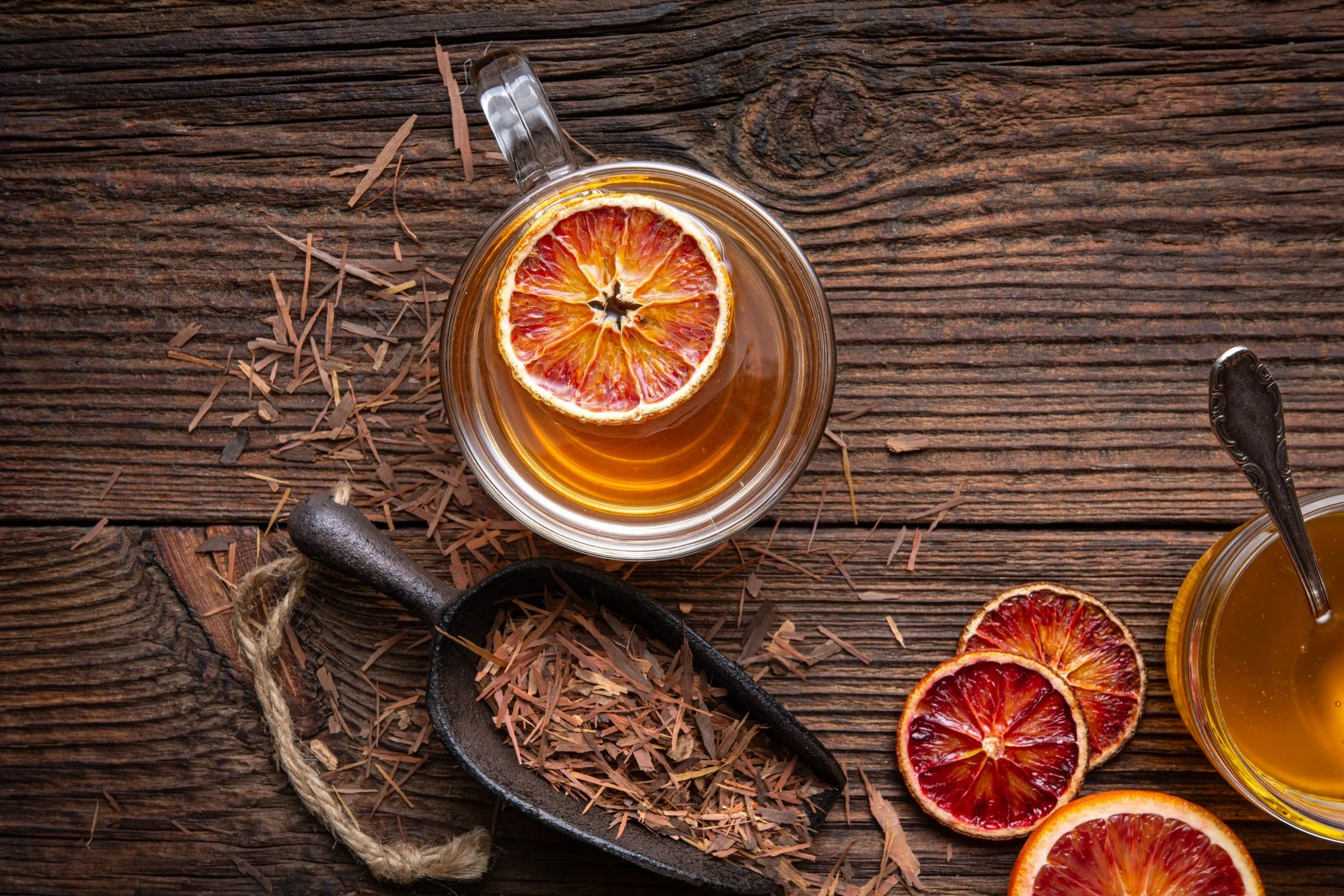
Pau d’Arco is traditionally worked with as a decoction of the inner bark, slowly simmered over time to draw out its deep, transformative medicine. This long boiling process is part of the initiation. It reflects the way Pau d’Arco works in the body and spirit: gradually, thoroughly, and without bypass. The resulting tea is dark, earthy, and grounding, often described as coffee-like, and is taken intentionally rather than casually.
Because of its potency, Pau d’Arco is best approached as a focused protocol, not a background support. It is commonly used during periods of deep cleansing, terrain rebuilding, or systemic challenge. Many traditions emphasize working with Pau d’Arco in cycles, allowing space between uses for integration. This medicine is not rushed. Its intelligence unfolds over time.
In some indigenous contexts, Pau d’Arco is also worked with ceremonially, especially during purification rites or major life transitions. Its role here is to support endurance, clarity, and surrender to necessary change. Energetically, Pau d’Arco invites the practitioner or individual to meet what is dissolving with trust rather than resistance.
Working with Pau d’Arco requires listening. It often signals when enough has been taken. Fatigue, emotional surfacing, or a sense of completion are cues to pause and integrate before continuing.
Cautions and Duration of Use: Pau d’Arco
Pau d’Arco is not a long-term daily tonic. It is a medicine for specific seasons of transformation. Continuous, prolonged use without breaks is not recommended.
Because Pau d’Arco engages deep detoxification and terrain-level change, it should be used cautiously in individuals who are severely depleted, pregnant, breastfeeding, or highly sensitive, unless under the guidance of an experienced practitioner. Its intensity can be too much for systems that require nourishment and stabilization first.
Pau d’Arco may also be inappropriate for individuals on blood-thinning medications or with conditions that affect clotting, as it has traditionally been associated with blood movement and purification.
This medicine is best used short-term or cyclically, with clear intention and adequate support for elimination, hydration, and rest. When its work is complete, the body usually signals clearly that it is time to stop.
Where to Source Pau D’ Arco
Because Pau d’Arco is a powerful, terrain-altering medicine, sourcing is especially important. The potency and integrity of this plant depend on how the inner bark is harvested, prepared, and handled.
For Pau d’Arco, I recommend Anima Mundi Herbals. They offer Pau d’Arco as a powdered inner bark, prepared in a way that is ready to be blended into a strong, traditional decoction. This form honors the ancestral method of preparation while making the medicine accessible for modern use.
Anima Mundi Herbals is known for ethical sourcing, reverent handling of plant medicines, and formulations that maintain the energetic intelligence of the plant. Their powdered Pau d’Arco is especially well-suited for intentional, short-term protocols and ceremonial-style use, where depth, strength, and respect for the medicine are paramount.
This is the form I encourage working with, as it supports Pau d’Arco’s full expression as a medicine of metamorphosis rather than convenience..